Rajasthan High Court Directs State to Grant Disability Leave to Comatose Constable
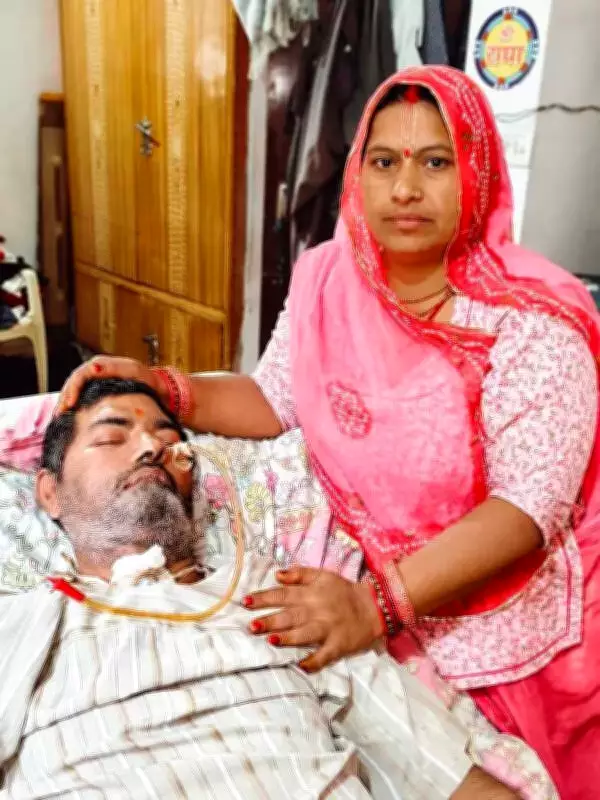
The Rajasthan High Court has issued a significant order directing the state government to provide special disability leave and release all pending salary to a police constable who has been in a coma since August 2021. The constable, Narendra Singh Sisodia, suffered severe injuries in a road accident while performing official duties, leading to his current medical condition.
Court Order Details and Legal Proceedings
In an order passed on March 12 and officially uploaded on Tuesday, Justice Anand Sharma of the Rajasthan High Court allowed a writ petition filed by Sharda Kanwar, the wife of constable Narendra Singh Sisodia. The constable was stationed at the Ramnagaria police station at the time of the incident. According to the petition, Sisodia met with a serious accident on August 22, 2021, when the tyre of his motorcycle burst while he was actively on duty.
He suffered severe injuries in the incident and immediately slipped into a coma. Medical experts later conducted a thorough assessment and determined his disability at 85%. Tragically, he has not regained consciousness since the accident occurred. Since the accident happened while he was on official duty, he is entitled to benefits under Rule 99 of the Rajasthan Service Rules (RSR), 1951. This specific rule provides for special disability leave when a government servant suffers disability while performing official duties.
Counsel for the petitioner, Laxmikant Malpura, explained to the court that the legal basis for the claim is firmly rooted in these service rules. The petitioner also presented compelling official communications to support the case. These included documents from the Station House Officer (SHO) of Ramnagaria police station and a crucial letter dated October 30, 2023, from the deputy commissioner of police for Jaipur East. Both communications explicitly confirmed that constable Sisodia was indeed on duty at the precise time of the accident.
State Government's Opposition and Court's Rejection
The state government, however, opposed the plea during the legal proceedings. Government lawyers argued that since no First Information Report (FIR) was officially lodged regarding the accident, Sisodia's status of being on duty was not conclusively established. They contended that the absence of this formal police report created reasonable doubt about the circumstances surrounding the incident.
The court, in its detailed judgment, firmly rejected this argument. The bench held that the official reports from police authorities and the unique disability ID certifying 85% disability were more than sufficient to meet the necessary conditions under the service rules. Justice Sharma emphasized that mere suspicion arising from the absence of an FIR or minor discrepancies in the police diary cannot be used to deprive a dedicated employee of legitimate service benefits that are rightfully due.
Legal References and Final Directions
In its comprehensive ruling, the court also made reference to Section 20(4) of the Rights of Persons with Disabilities Act, 2016. This important legislation provides specific protections for government employees who acquire disabilities during their service, reinforcing the constable's entitlement to support.
By allowing the petition, the court issued clear and specific directions to the authorities:
- Grant special disability leave to constable Narendra Singh Sisodia
- Release all pending salary from August 2021 onwards
- Continue paying regular salary as per entitlement until Sisodia's official retirement
The police department has been instructed to complete this entire process within 30 days of receiving the certified copy of the court order. This timely directive ensures that the constable's family receives the financial support and benefits they have been awaiting for nearly three years since the tragic accident occurred.
This landmark judgment underscores the judiciary's role in protecting the rights of government employees, particularly those who suffer disabilities in the line of duty. It establishes an important precedent for similar cases where bureaucratic hurdles might otherwise delay or deny legitimate benefits to injured public servants and their families.