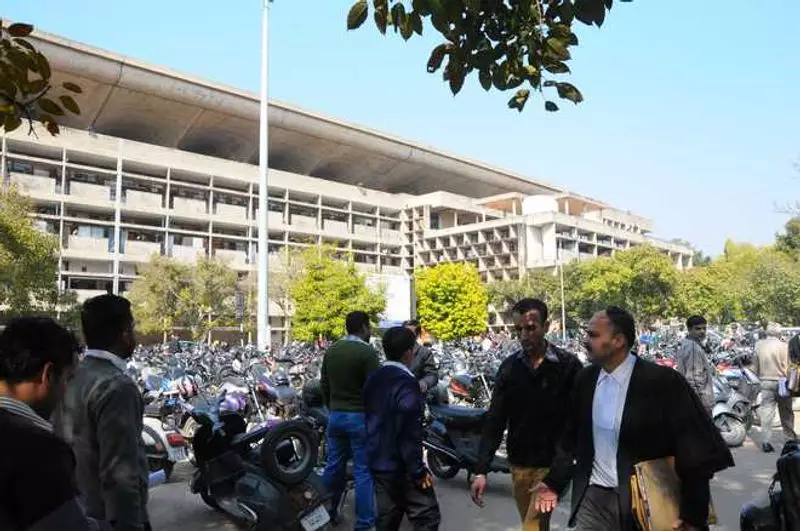
Punjab High Court Expansion Delayed Pending UNESCO Heritage Impact Assessment Report
The ambitious expansion project of the Punjab and Haryana High Court has hit a significant roadblock, as authorities now await a crucial heritage impact assessment report. This delay stems from stringent constraints imposed by UNESCO, which has designated Chandigarh, the city housing the High Court, as a World Heritage Site. The situation underscores the complex interplay between modern infrastructural development and the imperative to preserve cultural and architectural heritage.
UNESCO Constraints and Their Implications
Chandigarh, renowned for its modernist architecture and urban planning by Le Corbusier, was inscribed as a UNESCO World Heritage Site in 2016. This designation brings with it a set of rigorous guidelines aimed at protecting the city's unique architectural integrity and historical significance. Any proposed construction or modification within the heritage zone, including the High Court expansion, must undergo a thorough heritage impact assessment to ensure compliance with UNESCO standards.
The delay in the High Court expansion project is directly attributed to these UNESCO constraints, which mandate that any development must not adversely affect the Outstanding Universal Value of the site. Authorities are now in the process of preparing a detailed report that evaluates the potential impacts of the expansion on Chandigarh's heritage character. This report is essential for securing necessary approvals and moving forward with the project while adhering to international preservation norms.

Details of the High Court Expansion Project
The expansion of the Punjab and Haryana High Court is a long-awaited initiative aimed at addressing the growing judicial workload and improving infrastructure for the judiciary. The project involves:
- Construction of additional courtrooms and chambers to accommodate more judges and staff.
- Enhancement of facilities for lawyers, litigants, and the public, including better waiting areas and digital infrastructure.
- Upgrades to administrative offices and support services to streamline judicial processes.
However, with the heritage impact assessment report still pending, the timeline for these improvements remains uncertain. The High Court, a key institution in the region, continues to operate within its existing constraints, highlighting the urgency of resolving this impasse.
Balancing Development and Heritage Preservation
This scenario reflects a broader challenge faced by many historic cities in India and worldwide: how to balance the need for modern development with the duty to protect cultural heritage. In Chandigarh's case, the UNESCO designation is a point of pride but also imposes significant responsibilities. The heritage impact assessment report will play a pivotal role in determining whether the High Court expansion can proceed in a manner that respects the city's architectural legacy.
Experts emphasize that such assessments are not merely bureaucratic hurdles but essential tools for sustainable development. By evaluating potential impacts on heritage sites, authorities can design projects that minimize harm and, in some cases, even enhance the cultural value of the area. The outcome of this report could set a precedent for future development projects in Chandigarh and other UNESCO-listed sites in India.
Next Steps and Stakeholder Perspectives
As the heritage impact assessment report is awaited, stakeholders including the judiciary, state government, and heritage conservation bodies are closely monitoring the situation. Key considerations include:
- Ensuring that the report is comprehensive and addresses all UNESCO guidelines to avoid further delays.
- Exploring adaptive design solutions that integrate the expansion with Chandigarh's modernist aesthetic.
- Engaging with local communities and heritage experts to build consensus on the project's implementation.
The resolution of this issue will not only impact the High Court's functionality but also reinforce India's commitment to preserving its cultural heritage on the global stage. Until the report is finalized and approved, the expansion remains in limbo, symbolizing the delicate dance between progress and preservation.