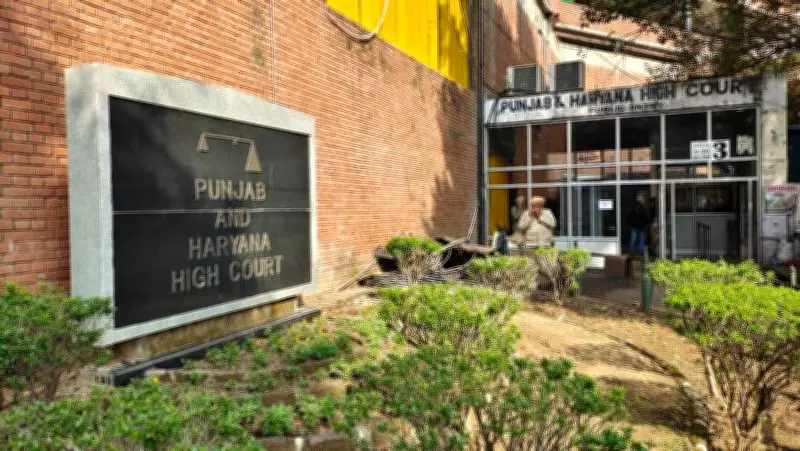
The Punjab and Haryana High Court has set aside orders directing the framing of charges against a Deputy Superintendent of Police under the Narcotic Drugs and Psychotropic Substances (NDPS) Act, holding that the trial court ought to have allowed his discharge plea. The Bench observed that continuing the prosecution would result in unnecessary waste of judicial time and avoidable expenditure on the State exchequer.
Case Background
Justice NS Shekhawat set aside orders passed by the Special Court, Ludhiana, on January 27 and February 10, 2023, whereby charges under Section 58 of the NDPS Act were ordered to be framed against the officer, and his application for discharge was dismissed. The petitioner, Gurmukh Singh Cheema, contended that the case arose out of the alleged recovery of 720 grams of opium from the house and tubewell room of an accused. According to him, when he reached the spot, he directed the investigating officer not to arrest the accused as he found the facts suspicious.
Petitioner's Submissions
The officer further submitted that even after registration of the FIR against him, investigations were conducted repeatedly, and each time he was found innocent. He maintained that he had neither conducted the search nor seized the contraband, investigated the matter, or arrested any accused. He stated that he had visited the place of recovery only once on the directions of his senior officers and, after reaching there, merely directed the investigating officer not to arrest the accused for the time being.

Court's Observations
During the hearing, the High Court took note of the contentions that the raid leading to the recovery of 720 grams of opium had been conducted by the investigating officer and that the petitioner, who was then posted as DSP (Detective), had reached the spot and told the investigating officer not to arrest the accused. The petitioner was represented before the High Court by advocate H.S. Batth.
Justice Shekhawat further noted that during the investigation, the father of the accused had moved an application before the Senior Superintendent of Police. The matter was marked for inquiry, which concluded that the contraband had been planted on the accused at the instance of certain persons. Despite this, proceedings against the accused continued, and he was eventually convicted during trial.
The court observed that, subsequently, on the directions of the High Court, an FIR was registered against the investigating officer and the petitioner. The matter was again investigated, and a cancellation report was presented before the Special Court, Ludhiana.
Trial Court's Actions
The Bench observed that the trial court took cognisance of the offence and ordered the prosecution of several persons, including the investigating officer. However, during the course of the trial, the investigating officer and others were acquitted. Referring specifically to the petitioner, Justice Shekhawat observed that a cancellation report had already been presented by the police in his favour and that no incriminating evidence had been collected against him.
High Court's Decision
The High Court held that the trial court ought to have allowed the petitioner's prayer for discharge. The court added that continuing the proceedings would amount to an unnecessary waste of judicial time and avoidable expenditure on the State exchequer, particularly when the result was also likely to be the same as that in the case of the co-accused who had already been acquitted. Allowing the revision petition, the High Court set aside the impugned orders and ordered that the petitioner be discharged.