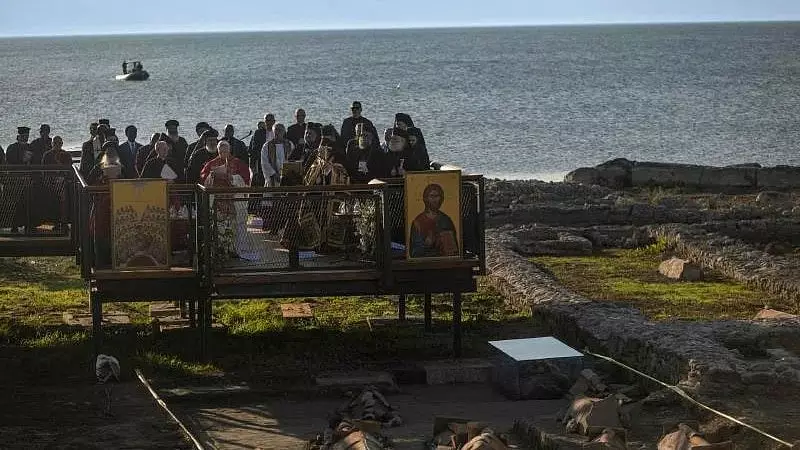
In a significant move toward Christian reconciliation, Pope Leo XIV has embarked on a historic visit to Turkey, focusing on healing centuries-old divisions between Christian denominations. The pontiff's journey represents a powerful symbolic gesture aimed at fostering unity among ancient Christian communities that have been separated for generations.
A Symbolic Gesture of Unity
The Pope's visit has been met with enthusiastic responses from local Christian communities, particularly the Greek Orthodox population in Istanbul. Minas Vasiliadis, the publisher of Apoyevmatini, Istanbul's renowned Greek-language newspaper, expressed strong support for the initiative. He described the Pope's efforts as bearing "great symbolism for Christianity" and emphasized that it represents "a very positive thing" for interdenominational relations.
The timing of this visit, occurring in late November 2025, adds significance to the ecumenical efforts. Turkey, with its rich Christian history spanning both Eastern Orthodox and Roman Catholic traditions, provides the perfect backdrop for these reconciliation talks. The country hosts several ancient Christian sites and maintains active communities from various Christian traditions.
Historical Context and Current Implications
The divisions between Eastern Orthodox and Roman Catholic churches date back to the Great Schism of 1054, creating a nearly thousand-year separation between these major branches of Christianity. Previous popes have made efforts toward reconciliation, but Pope Leo XIV's current initiative appears to be particularly focused and determined.
The Greek community in Istanbul, though diminished in numbers over recent decades, maintains an important presence in Turkey's religious landscape. Vasiliadis's newspaper, Apoyevmatini, has served this community for generations, making his endorsement particularly meaningful. The publication has witnessed numerous ecumenical efforts throughout its long history.
Potential Outcomes and Future Prospects
This visit could mark a turning point in Catholic-Orthodox relations, with potential implications for Christian communities worldwide. The Pope's approach appears to be one of gentle diplomacy and symbolic gestures rather than dramatic theological declarations.
Observers note that the choice of Turkey as the location for these talks is particularly significant, given the country's unique position as a bridge between East and West. The nation hosts important holy sites for multiple Christian denominations and has historically been a meeting point for different religious traditions.
The international Christian community is watching these developments closely, hoping that this visit might pave the way for more substantial dialogue and cooperation between the ancient churches. While theological differences remain substantial, the symbolic importance of this visit cannot be overstated in its potential to create warmer relations and improved understanding.