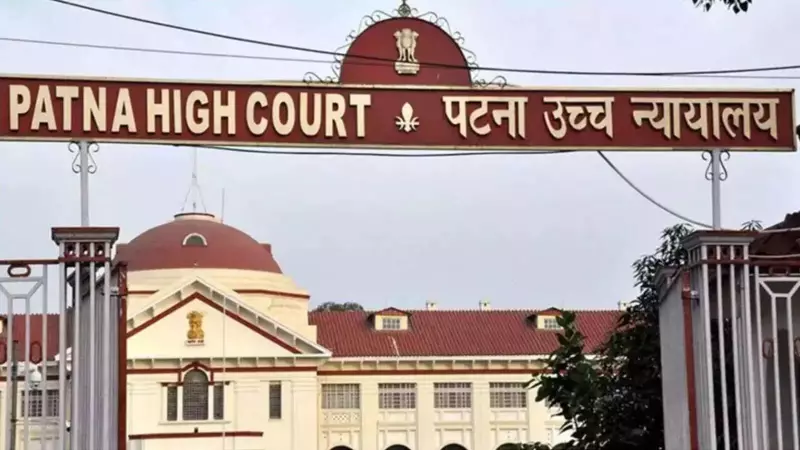
Patna High Court Upholds Death Penalty in Brutal Cousin Murder Case, Invokes Mahabharata's Moral Lessons
The Patna High Court has delivered a landmark verdict, upholding the death penalty for two individuals convicted of a heinous crime that shocked the community in Rohtas district. Aman Singh and his brother Sonal Singh, along with their father Ajay Singh, were found guilty of brutally murdering their three distant cousins in a violent attack five years ago. The court's decision reinforces the severity of the crime and its devastating impact on the victims' family.
Court's Verdict and Moral Reference to Mahabharata
A division bench comprising Justices Rajeev Ranjan Prasad and Sourendra Pandey confirmed the death penalty originally awarded by the Additional Session Judge (ASJ) of Rohtas on May 9, 2024. The high court's judgment, which was uploaded to its official websites on January 22, drew upon ancient wisdom to underscore the gravity of the offense. In their ruling, the judges cited the moral teachings of the Mahabharata, remarking that perpetrators of such crimes, akin to the Kauravas, inevitably face tragic ends as divine punishment for their adharma or sin.
The bench emphasized that the crime was not merely a triple murder but an act that left an entire family devoid of male members, devastating the lives of three women who were widowed as a result. This profound loss and the brutality of the attack led the court to deem it a fit case for sending the perpetrators to the gallows, highlighting the irreversible damage inflicted on the victims' kin.
Details of the Gruesome Crime and Investigation
According to the case details, the horrific incident occurred on July 13, 2021, in Khudrao village under the Darihat police station area of Rohtas district. Aman Singh, Sonal Singh, and their father Ajay Singh launched a fatal assault on their distant cousins—Vijay Singh and his two sons, Deepak Singh and Rakesh Singh—using swords and other sharp weapons. The attack proved fatal, with all three victims succumbing to their injuries shortly after.
Following the tragedy, an FIR was registered at Darihat police station under case number 111/2021. During the subsequent police investigation, Ajay Singh managed to evade capture and remains a fugitive. However, Aman and Sonal were arrested and sent to jail to face trial on murder charges. On May 4, 2024, the trial court of ASJ-19 in Rohtas found both accused guilty of the murders, paving the way for the high court's recent affirmation of the death penalty.
Implications and Broader Context
This verdict underscores the judiciary's firm stance against violent crimes that tear apart families and communities. By invoking the Mahabharata, the Patna High Court not only addressed the legal aspects but also highlighted the ethical and moral dimensions of justice. The case serves as a stark reminder of the consequences of such brutal acts and the importance of upholding law and order in society.
The upholding of the death penalty in this instance reflects the court's commitment to ensuring that justice is served, particularly in cases where the crime's impact extends beyond the immediate victims to devastate entire families. It also reinforces the role of the judiciary in interpreting and applying legal principles in alignment with broader cultural and moral values.