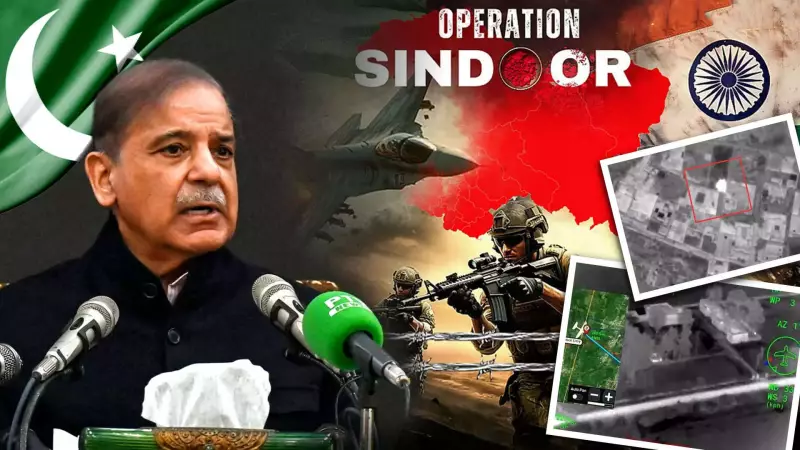
Pakistan Prime Minister Shehbaz Sharif has made a strong public commitment to defeat terrorism in his country. He delivered this promise during a meeting with senior clerics from the National Paigham-i-Aman Committee. Sharif stated that militants would be thrown into the Indian Ocean, using vivid language to emphasize his government's stance.
Pakistan's Claimed Sacrifices And Military Strength
The Prime Minister highlighted what he described as Pakistan's significant sacrifices in the fight against militancy. He claimed that over one hundred thousand Pakistani citizens have lost their lives due to terrorist activities over the years. Shehbaz Sharif also referenced Pakistan's military capabilities, specifically mentioning the conflict with India that occurred in May 2025.
Contradictory Reality On The Ground
Despite these public declarations, the actual situation presents a different picture. Leaders of known terrorist organizations continue to operate freely and issue threats against India. Audio messages attributed to Masood Azhar, a prominent figure associated with Jaish-e-Mohammed, have surfaced recently. These messages claim that thousands of trained terrorists stand ready to launch attacks.

India has previously conducted successful counter-terrorism operations that disrupted terrorist infrastructure. Operation Sindoor, for instance, resulted in the elimination of hundreds of terrorists both across the Line of Control and within Pakistan's territory. This operation demonstrated India's capability and resolve in addressing cross-border terrorism.
India's Vigilant Stance And Security Concerns
Indian security forces maintain constant surveillance along the border regions. Although there has been a noticeable reduction in troop movements recently, monitoring remains active and comprehensive. Indian authorities have issued clear warnings that any renewed terrorist activity will be met with decisive and immediate response.
The continued existence and operational freedom of extremist networks like Lashkar-e-Taiba and Jaish-e-Mohammed raise serious security concerns for India. These groups have historically carried out attacks on Indian soil, resulting in significant loss of life and property. The gap between Pakistan's official rhetoric and the ground reality creates an environment of uncertainty and potential danger.
Security analysts point to Pakistan's apparent inability to control these extremist elements as a major challenge for regional stability. The threats emanating from terrorist leaders directly contradict the Pakistani government's public commitments to combat terrorism. This discrepancy underscores the complex security dynamics in South Asia and the ongoing tensions between the two neighboring nations.