Two months after a dramatic arrest, the Mumbai Crime Branch has concluded that a case involving a man posing as a senior Bhabha Atomic Research Centre (BARC) scientist was driven by financial motives, not terrorism or espionage. The investigation, which uncovered a web of fake identities and forged documents, has now been formally detailed in a chargesheet submitted to the court.
An Elaborate Scheme for Financial Gain
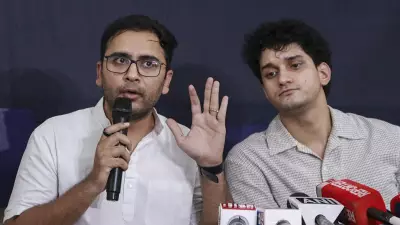
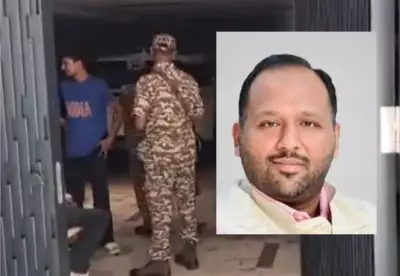
Last Saturday, the police filed a chargesheet against the primary accused, Akhtar Qutubuddin Ahmed Hussaini, a resident of Versova, and his accomplice, Munazir Khan. The document outlines a complex conspiracy where Hussaini allegedly created multiple fake personas using forged credentials. Despite the initial recovery of technical drawings and sensitive-looking literature, forensic and technical scrutiny by relevant agencies found no evidence linking the activities to espionage, terrorism, or threats to national security.
The chargesheet, which relies on call detail records (CDRs) and reports from the Intelligence Bureau (IB) and National Investigation Agency (NIA), paints a picture of a scheme orchestrated purely for monetary benefit. It invokes several sections of the Bharatiya Nyaya Sanhita (BNS) for criminal conspiracy, impersonation, forgery, and cheating, alongside Section 12(1)(b) of the Passport Act for providing false information to obtain a passport.

Forged Identities and International Travel
Investigators revealed that Munazir Khan actively assisted Hussaini by preparing a suite of forged documents. These included fake educational certificates, Aadhaar and PAN cards, and driving licenses required to construct false identities. One notable alias used by Hussaini was Alexander Palmer, under which he fraudulently obtained a passport and undertook both domestic and international travel.
The probe also identified a third accused, Mohammad Ilyas Mohammad Ismail, a resident of Jamshedpur, who has been declared wanted in the case. Meanwhile, the police have clarified that Hussaini's brother, Adil Hussaini, arrested by Delhi Police in a separate case for alleged links to Pakistan's ISI and running a fake passport racket, is not involved in this particular Mumbai investigation.
Technical Evidence and Judicial Scrutiny
As part of a meticulous investigation, the crime branch seized digital devices, including a hard disk, from the accused. These were sent to the judicial medical laboratory in Kalina for a comprehensive forensic examination. To map the conspiracy, police also obtained CDRs and subscriber detail records from mobile service providers to establish communication patterns between the accused.
The statements of key witnesses were recorded and annexed to the chargesheet. A Mumbai court has taken cognizance of the document and has permitted the police to continue with further investigation into the matter, keeping the legal process active.