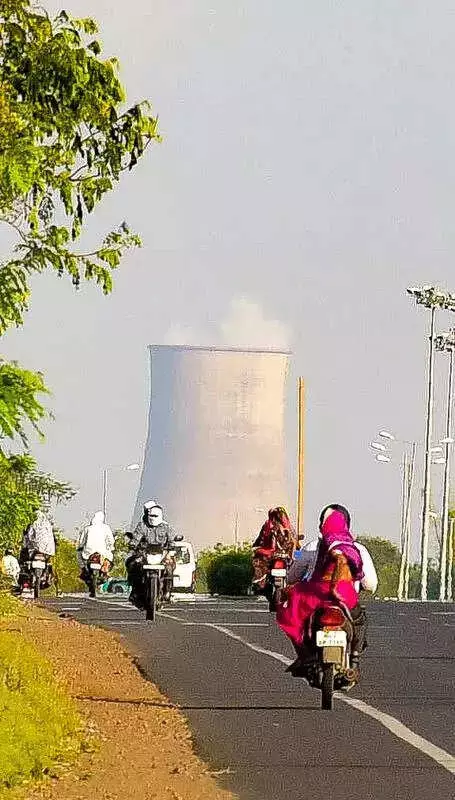
Nagpur High Court Takes Cognizance of Thermal Plant Pollution Forcing Village Migration
The Nagpur bench of the Bombay High Court on Thursday took serious note of alarming allegations that severe pollution from the Khaparkheda thermal power station has compelled residents of neighboring villages to abandon their homes and migrate. The court acknowledged claims of toxic emissions, pervasive dust, and chemical contamination rendering both air and water unsafe for daily use in the affected communities.
Court Issues Notices Based on PIL and Expert Report
Acting on a Public Interest Litigation (PIL) filed by social activist Rajesh Chavan, a division bench comprising Justices Anil Kilor and Raj Wakode issued formal notices to the Maharashtra state energy department, including its secretary, and other concerned authorities. The court directed these respondents to file detailed affidavits and responses within a strict timeframe of two weeks.
During the proceedings, the court-appointed amicus curiae, Nilesh Kalwaghe, presented a crucial joint report published on July 8, 2024. This comprehensive study was conducted by the Maharashtra Pollution Control Board, the Council of Scientific and Industrial Research (CSIR), the National Environmental Engineering Research Institute (NEERI), and IIT Bombay. The report analyzed air quality across ten major cities in Maharashtra, specifically including Nagpur, Chandrapur, and Amravati.
Report Identifies Plant as Major Pollution Contributor
The scientific report unequivocally identified the Khaparkheda thermal power plant, operated by the Maharashtra State Power Generation Company Limited (MSPGCL), as a significant and primary contributor to deteriorating air quality in the Nagpur region. The PIL builds upon this finding, alleging that the plant's operations have caused extensive and multi-faceted environmental degradation.
The litigation claims the pollution has adversely impacted air quality, contaminated groundwater sources, damaged agricultural land and local vegetation, and harmed wildlife in the vicinity. A particularly grave allegation is that the contaminated water has deprived residents of access to safe drinking water, a fundamental necessity. This environmental crisis, the PIL argues, has forced several families to leave their ancestral villages in search of healthier and safer living conditions, constituting an environmental migration.
Petitioner Seeks Expert Committee and Accountability
The petitioner argued before the court that the pollution levels have escalated to a point where they directly threaten the fundamental right to life and health of local residents, thereby necessitating immediate and robust judicial intervention. To address the crisis, the PIL seeks the constitution of an independent expert committee.
This proposed committee would comprise pollution specialists, environmental scientists, ecological experts, and researchers. Its mandate would be to conduct a thorough assessment of the extent of environmental damage, hear submissions from all stakeholders including affected residents, and submit a comprehensive report to the court. As an alternative, the petitioner urged the court to appoint experts directly from NEERI and CSIR to undertake this evaluation.
Furthermore, the plea demands a clear fixing of responsibility on MSPGCL for the alleged environmental damage. It calls for the formulation of a concrete, time-bound, and legally enforceable action plan to curb pollution from the plant effectively. The petitioner also sought disciplinary and penal action against any erring officials of the Maharashtra Pollution Control Board for potential lapses in regulatory oversight.
High Court Directs Respondents to State Their Position
After taking detailed note of the joint expert report and the submissions made by the petitioner's counsel, the High Court has directed all respondents, including the state energy department and MSPGCL, to formally place their stand and counter-arguments on the court record. This step sets the stage for further legal scrutiny of the serious environmental and human rights issues raised in the PIL concerning the Khaparkheda thermal power station.