Nagpur High Court Takes Suo Motu Action on Deteriorating Anganwadi Centers in Saoner Municipality
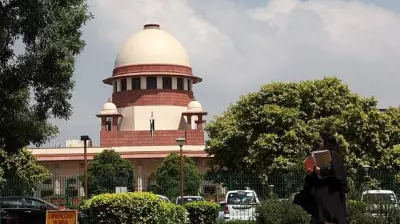
In a significant move to protect vulnerable children, the Nagpur bench of the Bombay High Court has taken suo motu cognizance of the alarming condition of anganwadi centers in Saoner municipality. Expressing deep concern over children attending classes in unsafe and crumbling structures, the court on Wednesday directed that a Public Interest Litigation (PIL) be filed within two weeks to address this critical issue.
Court's Proactive Intervention Based on Media Reports
A division bench comprising Justices Anil Kilor and Raj Wakode passed this crucial order after taking note of media reports that highlighted both the severe shortage of anganwadi centers and the deteriorating state of existing facilities in Saoner town. The bench demonstrated judicial urgency by appointing advocate Ashwini Aathle as amicus curiae and directing her to prepare and submit an appropriate petition before the registry within the stipulated timeframe.
The Critical Role of Anganwadi Centers Under ICDS Scheme
Under the Integrated Child Development Services (ICDS) scheme, anganwadi centers serve as vital community hubs meant to provide comprehensive support including pre-school education, supplementary nutrition, and basic healthcare services to children and mothers. However, the reports presented before the court painted a troubling picture, suggesting that several centers within the municipal area are either inadequate in number or operating in dangerously unsafe conditions that compromise child welfare.

Stark Disparity Between Rural and Municipal Infrastructure
Official data reveals a total of 215 anganwadi centers functioning across Saoner taluka under the zilla parishad's women and child welfare department. While rural areas under the panchayat samiti appear to have comparatively better infrastructure and more effective implementation of nutrition and welfare schemes, the situation within the municipal limits of Saoner presents a markedly different and concerning reality.
According to established norms, wards with populations ranging from 600 to 1,500 residents should have at least 12 to 15 anganwadi centers to adequately serve the community. Shockingly, only six centers are currently functioning in the entire town, raising serious concerns about access to essential early childhood services for a large number of beneficiaries who depend on these facilities.
Detailed Assessment of Individual Center Conditions
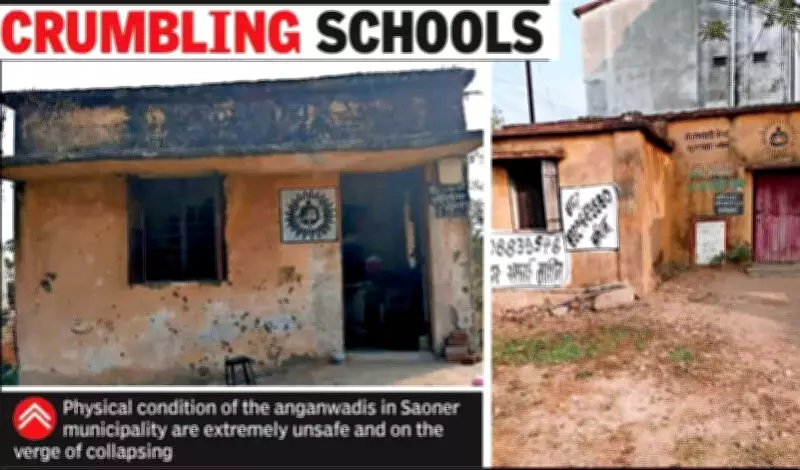
Four specific anganwadis located in Chinchpura, Matakhedi, Satwa Mata Mandir, and Phelepar areas are currently operating from rented private premises, which may lack proper safety standards and infrastructure. Meanwhile, two additional centers situated in Old Gujarkhedi and Nag Mandir are located on government land but were described as being in particularly precarious and unsafe conditions that require immediate attention.
The building at Old Gujarkhedi has reportedly developed dangerous cracks in its roofing structure and lacks basic safety infrastructure, including a protective compound wall and a proper electricity connection. Despite Gujarkhedi being included within municipal limits and officials having inspected the site earlier, necessary repair or reconstruction work has yet to begin, leaving children at continued risk.
Court's Emphasis on Child Safety and Immediate Action
Taking serious note of the gravity of this issue, particularly concerning the safety of young children attending these centers, the court observed that the situation warranted immediate judicial attention and intervention. The bench emphasized that the structural integrity and safety standards of educational and childcare facilities cannot be compromised, especially when they serve the most vulnerable segments of society.
This judicial intervention highlights systemic failures in maintaining essential public infrastructure and underscores the court's commitment to ensuring that government schemes meant to support child development actually function in safe, accessible environments. The forthcoming PIL is expected to address not only immediate safety concerns but also the broader systemic issues affecting anganwadi center implementation and maintenance across the region.