Engineers File for Bail in Fatal Mumbra Train Accident Case
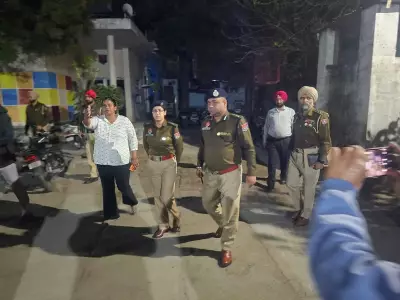
Two Central Railway engineers, accused in the tragic Mumbra train accident that resulted in the deaths of five passengers on June 9 this year, have moved the Thane court seeking anticipatory bail. The engineers, Assistant Divisional Engineer Vishal Dolas and Senior Section Engineer Samar Yadav, were named in an FIR filed by the Thane Government Railway Police (GRP).
On Thursday, November 7, 2025, their lawyers, Baldev Rajput and Priyanka Dable, submitted the bail pleas. The court has since directed the investigating officer and prosecutor to file their reply and has scheduled the next hearing for November 11.
Defense Argument: Overcrowding, Not Track Failure
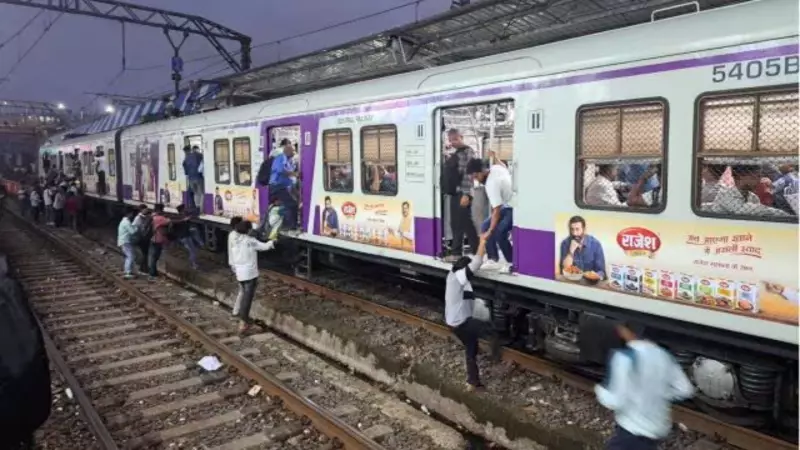
In their defense, the engineers have squarely placed the blame for the incident on severe overcrowding in the local trains. They argued that if the accident had been caused by a fault in the railway tracks, the movement of the over 200 trains that passed over the same section before and after the accident would have been disrupted.
Their plea emphasized that since numerous trains used the tracks without any issue both prior to and following the fatal event, a technical defect in the infrastructure could not be the root cause. The lawyers cited the Central Railway's internal inquiry report, which was prepared by September 20. This report concluded that a domino effect was triggered when a commuter's backpack, protruding from one train, brushed against a passenger on a parallel train, causing several people to fall.
The GRP's FIR and Conflicting Reports
The Thane GRP's FIR, registered on November 1, presents a different narrative. It alleges that heavy rain in the days leading up to the accident caused a drain near the Mumbra station tracks to choke. This led to water accumulation, which displaced the gravel beneath the tracks and caused the ground near the platform to sink.
According to the police, this subsidence created a height difference between adjacent tracks, bringing two passing trains dangerously close together. This proximity ultimately caused passengers to collide and fall, leading to the fatalities. The FIR was registered under sections related to culpable homicide not amounting to murder and acts endangering life and personal safety.
The GRP also referenced a technical report from the Veermata Jijabai Technological Institute (VJTI), which suggested a need for lower speed limits on that track section. However, the engineers' legal team pointed out that the police filed the FIR before receiving the railway's internal report, which was only sent to them on November 3. They also highlighted that the National Human Rights Commission (NHRC) had cited overcrowding as a primary reason for the incident.
Wider Ramifications: Worker Strike and Accountability
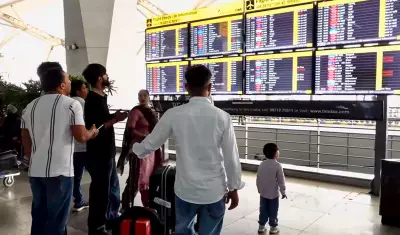
The filing of the FIR had immediate consequences, sparking a flash strike by the Central Railways workers' union. This industrial action brought numerous train services to a halt at Mumbai's Chhatrapati Shivaji Maharaj Terminus on Thursday, disrupting the daily commute for thousands.
The lawyers for the accused engineers further contended that managing crowd control on trains and platforms falls under the purview of the GRP. They suggested that the FIR might have been an attempt to shift the responsibility for the accident away from the police and onto the technical staff of the Central Railway.