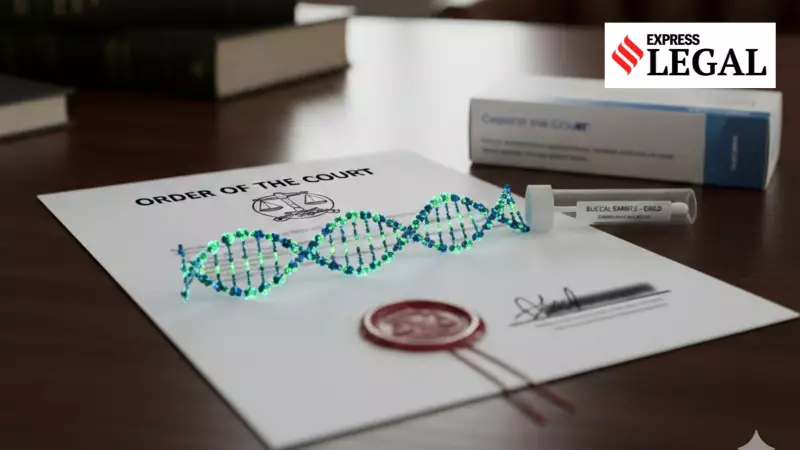
Madhya Pradesh High Court Permits DNA Testing of Child to Establish Adultery in Divorce Proceedings
The Madhya Pradesh High Court has delivered a significant ruling, upholding a family court's decision that allows for a DNA test of a child to prove allegations of adultery made by a husband against his wife in an ongoing divorce case. This judgment came while hearing a petition filed by a woman challenging the family court order that permitted her estranged husband to conduct the DNA test.
Court's Rationale: Truth-Seeking Over Privacy in Adultery Cases
Justice Vivek Jain, presiding over the case, emphasized that the DNA test was not sought to determine paternity or to evade maintenance responsibilities for the child. Instead, it was specifically aimed at substantiating the adultery allegations against the wife. The court noted that the divorce petition, filed on the grounds of adultery, contained sufficient pleadings to warrant such a test.
The order, dated January 21, 2026, stated that in cases where necessary legal pleadings are present and the issue solely relates to proving the wife's adultery—without seeking a declaration of the child's illegitimacy—a DNA test can be ordered in appropriate circumstances. This marks a nuanced approach to balancing individual privacy rights with the judicial pursuit of truth.
Privacy vs. Truth: The Legal Balancing Act
The wife had argued vehemently against the DNA test, citing the right to privacy under Indian law. She contended that the family court had exceeded its jurisdiction by ordering the test and that it violated the child's dignity, personal autonomy, and best interests as protected under child rights conventions.
On the other hand, the husband presented arguments centered on truth-seeking. He alleged non-access during the conception period, supported by medical evidence that contradicted the pregnancy timeline. According to his submissions, he returned from outstation duty in October 2015, and within four days, his wife informed him of her pregnancy. The child was born within eight months, and medical consultations indicated that conception cannot be detected within such a short timeframe, typically requiring 20 to 30 days post-conception.
Legal Consequences and Framework
The court outlined a clear legal framework for such cases. If the wife refuses to provide a DNA sample for the child, the family court is empowered to draw an adverse presumption under Section 114(h) of the Indian Evidence Act or corresponding provisions of the BSA 2023. This means that refusal itself can be construed as evidence against her, strengthening the husband's adultery claims.
This ruling underscores the judiciary's stance that when adultery is alleged with substantial pleadings, the need for truth in legal proceedings can outweigh privacy concerns. The court dismissed the woman's petition, thereby upholding the family court's original order.
Background and Context of the Case
The dispute originated in 2019 when the husband filed for divorce on grounds of adultery, claiming he had no access to his wife during the conception period. In 2022, the family court allowed his plea for a DNA test to determine whether the child was biologically his. This marked the third divorce petition between the couple; the first was withdrawn by the wife on the premise of seeking mutual consent, which later failed as she did not appear for the second motion. The current petition has been pending since 2021.
The High Court's decision reinforces legal precedents where DNA evidence is deemed crucial in adultery cases, provided the pleadings are adequate and the test's purpose is strictly to prove adultery, not to challenge the child's legitimacy. This ruling is expected to influence future family law cases involving similar allegations across India.