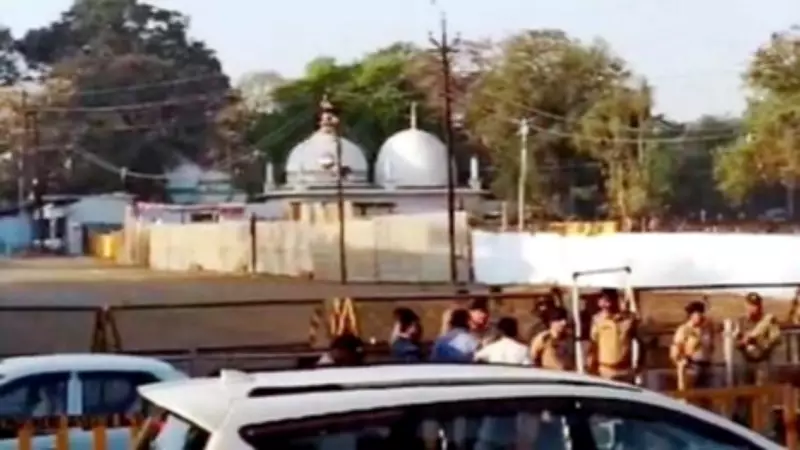
The Madhya Pradesh High Court has declared the disputed Bhojshala site in Dhar district as a temple, ruling that the Muslim side can seek separate land for their religious activities. The verdict, delivered on [date], brings an end to a decades-long legal battle over the ownership of the site, which has been a flashpoint between Hindu and Muslim communities.
Background of the Dispute
The Bhojshala complex, believed to have been built by the 11th-century Raja Bhoj, has been a subject of contention for years. Hindus claim it as a temple dedicated to Goddess Saraswati, while Muslims assert it houses a mosque. The Archaeological Survey of India (ASI) had been managing the site, allowing both communities to worship there on specific days.
High Court's Ruling
The High Court bench, comprising Justice [name], ruled that the site is a temple based on historical evidence and archaeological findings. The court stated that the Muslim side can approach the government for an alternative piece of land to build a mosque. The judgment emphasized that the rights of Muslims will not be infringed upon, as they will be provided with suitable land.

Reactions to the Verdict
Hindu groups celebrated the decision, calling it a victory for faith and history. Muslim organizations expressed disappointment but said they would explore legal options. The state government has been directed to facilitate the land allocation process within six months.
Implications
The ruling sets a precedent for similar disputed religious sites across India. Legal experts believe it reinforces the importance of historical evidence in such cases. The ASI has been asked to hand over the site to the Hindu side after ensuring the protection of any artifacts.
This verdict is expected to impact the political landscape in Madhya Pradesh, with local leaders weighing in on the issue. The court has urged both communities to maintain peace and harmony.