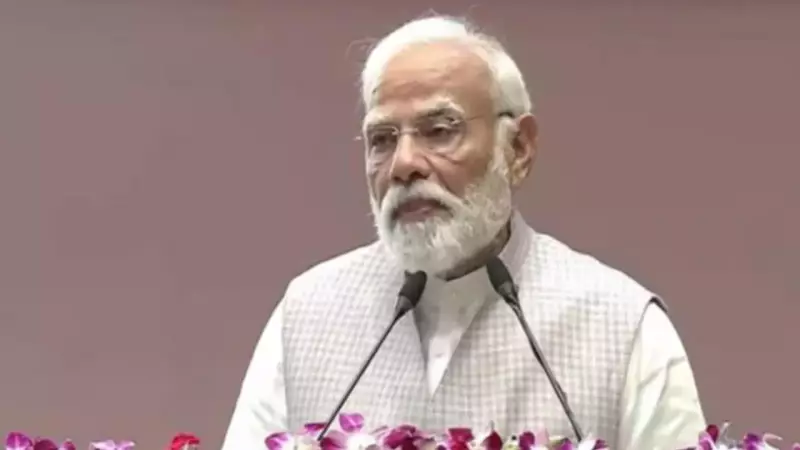
Prime Minister Narendra Modi declared on Saturday that ensuring the 'ease of justice' is a fundamental requirement for achieving both ease of living and ease of doing business in India. He stressed that the justice system must be accessible to every citizen, without any barriers based on social or financial status.
Key Initiatives for Accessible Justice
Speaking at a national conference organized by the National Legal Services Authority (NALSA) at the Supreme Court, the Prime Minister outlined the government's multi-pronged approach. He confirmed that several steps have been taken in recent years to make justice delivery faster and more inclusive, with a promise to further accelerate this process. He pointed to the success of mechanisms like Lok Adalats and pre-litigation settlements, which have resolved millions of disputes quickly, amicably, and at a low cost.
In a significant revelation, PM Modi stated that the legal aid defence counsel system, an initiative of the Government of India, has led to the resolution of nearly 800,000 criminal cases in just three years. He emphasized that these efforts have been particularly impactful in delivering justice to the poor, Dalits, and other oppressed and deprived sections of society.

Simplifying Law and Embracing Tradition
The Prime Minister strongly advocated for making the legal system more understandable for the common person. He asserted that the language of law should be one that is easily understood by those seeking justice. He called for judgments and legal documents to be made available in local languages and praised the Supreme Court for taking significant steps in this direction. He reasoned that when people comprehend the law in their own language, it leads to better compliance and ultimately results in fewer lawsuits.
During the event, PM Modi also launched NALSA's community mediation training module. He highlighted that mediation has deep roots in Indian civilization and that the new Mediation Act reflects this long-standing tradition of amicable dispute resolution in a modern, structured form.
Technology as a Catalyst for Justice
Underlining the role of innovation, the Prime Minister described technology as a powerful tool for expanding access to justice. He singled out the e-Courts Project as a key example of how digital tools are enhancing both inclusion and efficiency within the legal system. This project is part of a broader push to leverage technology for the benefit of every citizen interacting with the judiciary.
The two-day NALSA conference is set to deliberate on other crucial components of India's legal aid architecture, including the role of para-legal volunteers, permanent Lok Adalats, and the financial management of legal services institutions.