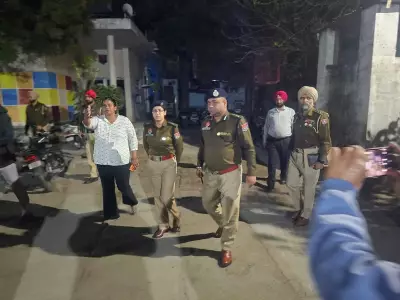
Meerut Deputy SP Issues Strict Warning Against Videography in Police Stations
In a controversial move, Deputy Superintendent of Police (DSP) Saumya Asthana of Meerut has issued a stern warning that any journalist found conducting videography inside police station premises under her jurisdiction will face the filing of a First Information Report (FIR). This directive has ignited a significant debate on social media and among civil society groups, with many labeling it as a potential violation of the fundamental right to freedom of expression.
Audio Clip Circulates, Sparking Widespread Discussion
A purported audio clip of DSP Asthana's directive has been widely circulated on various social media platforms. In the audio, she is heard explicitly instructing that journalists who record videos inside police stations will invite legal action. Furthermore, she cautioned police personnel about facing consequences if they fail to enforce this order effectively.
The circulation of this clip has led to intense discussions online, with numerous users expressing concern over what they perceive as an overreach that could stifle press freedom and transparency in law enforcement operations.
SSP Meerut Backs the Directive, Cites Misuse by Unrecognized Scribes
Senior Superintendent of Police (SSP) Avinash Pandey has come out in strong support of DSP Asthana's decision. He stated that the directive has been grossly misunderstood and emphasized that the circulated audio clip is incomplete. SSP Pandey explained, "There are many unrecognized and self-styled scribes who, with some personal agenda, make videos for vested interests within the premises of a police station. Such elements need to be sifted out. As the SSP, I fully support her decision."
This backing from a senior officer underscores the police department's stance on regulating media activities within their premises to prevent potential misuse and maintain order.
Context: Recent Actions on Digital Content in Uttar Pradesh
This development in Meerut is not isolated but part of a broader series of recent actions in Uttar Pradesh concerning digital content. In Moradabad, an FIR was filed over a social media post, naming two individuals who had commented on it, based on a complaint by a nagar nigam outsourcing employee.
Similarly, in Mathura, police charged nine social media influencers for allegedly circulating "misleading" clips of the traditional ‘Lathmar' and ‘Laddumar' Holi celebrations in Barsana and Nandgaon. An FIR was lodged under Bharatiya Nyaya Sanhita (BNS) sections 196(2), which deals with promoting enmity among groups during a religious ceremony, and 353(2), related to circulating false news, along with sections 67 and 67A of the Information Technology Act.
These incidents highlight the increasing scrutiny and legal actions being taken against digital content in the state, raising questions about the balance between regulation and freedom of expression.
Implications and Ongoing Debate
The warning from DSP Asthana has significant implications for journalistic practices in Meerut. While the police argue it is necessary to curb misuse by unauthorized individuals, critics fear it may lead to a chilling effect on legitimate reporting and public accountability.
As the debate continues, stakeholders from media organizations, legal experts, and civil rights groups are closely monitoring the situation, calling for clarity and adherence to constitutional safeguards. The outcome could set a precedent for how police departments across Uttar Pradesh and potentially other regions handle media interactions in the digital age.