Maoist Banners Emerge in Odisha's Rayagada District, Sparking Security Concerns
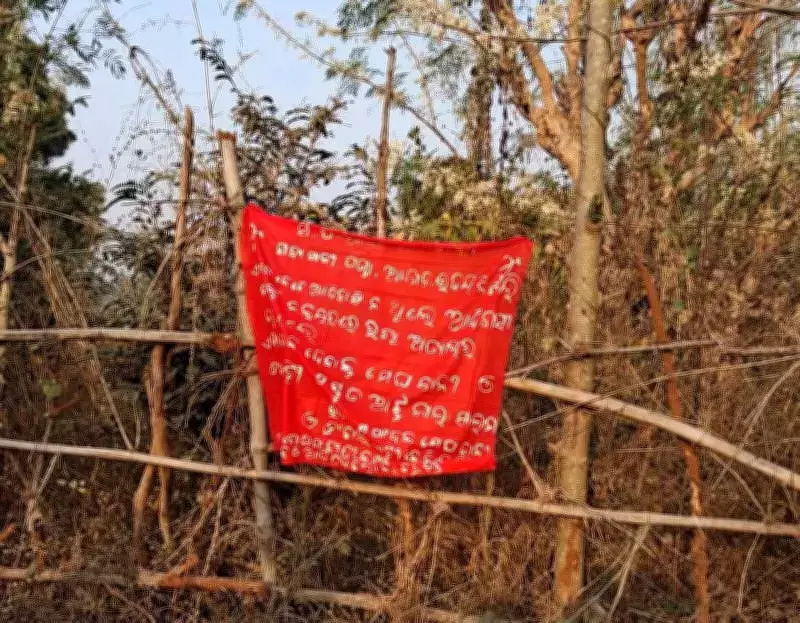
In a development that has heightened tensions in the region, Maoist banners surfaced in at least three separate locations within the jurisdiction of the Chandili police station in Rayagada district, Odisha, on Friday. The appearance of these provocative materials has prompted immediate and increased security measures across the area as authorities work to assess the threat and maintain public order.
Content of the Banners: Sharp Criticism of Former Leaders
The banners, which were written in the Odia language and purportedly issued under the name of the banned Communist Party of India (Maoist), contained pointed and severe criticism directed at several former Maoist leaders. Among those named were Sabyasachi Panda, Azad, Uday, and notably, Niranjan Rout, who is also known by his alias Nikhil.
The posters made specific allegations, claiming that these individuals were never truly tribals and had exploited tribal communities by keeping them entrenched within the naxalite movement. This accusation appears designed to undermine the credibility and legacy of these figures within the tribal populations that the Maoists often seek to mobilize.

Focus on Niranjan Rout's Recent Surrender
The reference to Niranjan Rout, alias Nikhil, has drawn particular scrutiny and attention due to his very recent and high-profile surrender to security forces. Just last week, Nikhil, once considered an influential and active Maoist leader in the region, formally laid down his arms along with his wife, Rasmita Lenka, who is also known as Indu.
This surrender was conducted under the state government's established surrender and rehabilitation policy, which aims to encourage Maoist cadres to reintegrate into mainstream society. The couple reportedly carried a combined reward of Rs 1.1 crore, with each individual having a bounty of Rs 55 lakh on their heads. Their decision to surrender was widely viewed as a significant setback for the outlawed Maoist organization, potentially weakening its organizational structure and morale, especially in the southern parts of Odisha.
Possible Motives Behind the Banners
According to sources familiar with the situation, the emergence of these fresh banners could represent a deliberate attempt by the banned Maoist outfit to counteract the impact of such high-profile surrenders. By publicly disowning and criticizing former leaders who have chosen to rejoin the mainstream, the group may be striving to reassert its presence and influence in the region.
A source indicated that this action seems intended to send a clear message to the remaining cadres, reinforcing ideological purity and discouraging further defections. The banners also prominently featured the slogan "Lal Salam" and claimed that state secretary Meghjani, Dambai Majhi, and other members of the Maoist organization were prepared to deliver a befitting reply, suggesting a tone of defiance and continued resistance.
Police Investigation and Security Response
However, local police authorities have expressed suspicions that the banners might not be authentic and could potentially be the handiwork of miscreants aiming to create panic and disrupt peace in the area. Rayagada in-charge Superintendent of Police Amulya Kumar Dhar provided an update on the ongoing investigation.
"Preliminary investigation suggests the banners are fake. Nevertheless, we are not taking any chances. A detailed probe is underway to trace the source and the situation is being closely monitored," Dhar stated, emphasizing a cautious and thorough approach.
In response to the prevailing situation and as a precautionary measure, additional security forces have been strategically deployed in vulnerable and sensitive areas to prevent any untoward incidents. This proactive deployment aims to ensure public safety and deter any potential disturbances that might arise from the appearance of these banners.
The incident underscores the ongoing challenges in regions affected by left-wing extremism and highlights the delicate balance between security operations and community engagement in efforts to combat insurgency.