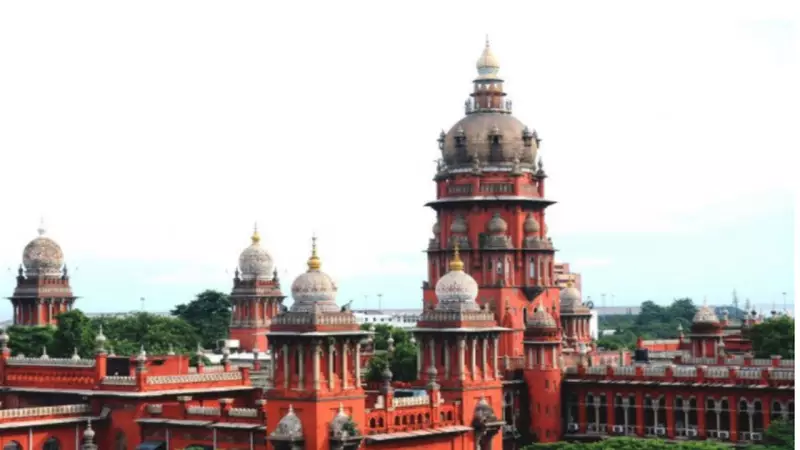
A division bench of the Madras High Court firmly refused to recuse itself from hearing a crucial plea on Monday. The Tamil Nadu government had moved the court seeking cancellation of the interim bail granted to controversial YouTuber Savukku Shankar. The bench, comprising Justice P Velmurugan and Justice M Jothiraman, stood its ground against allegations of bias.
Court Rejects Blackmail Claims
Justice P Velmurugan, the senior judge on the bench, made a powerful statement about his judicial tenure. He declared that in his twenty-one years of service as a judge, he has never recused himself from a single case. He emphasized that he acts solely according to his conscience. The bench collectively asserted that the court cannot be blackmailed or threatened into stepping away from its duties.
Counsel's Bias Allegation and Court's Response
Advocate Purushothaman, representing Savukku Shankar, pressed for the bench's recusal. He argued that the court had previously labeled Shankar a 'blackmailer,' indicating potential prejudice. The counsel insisted this warranted the judges stepping aside from the case.
The court responded with clarity and force. It stated that no one can prevent the counsel from approaching the Chief Justice to seek a transfer of the case to another bench. However, unless such an order is formally passed, the bench would proceed with the hearing. The judges scheduled the plea for Tuesday at 2:15 PM.
Defending Judicial Integrity
The bench elaborated on its position during the heated exchange. It directly addressed the counsel's tactics, stating, "You cannot threaten this court with your usual blackmailing." The judges affirmed they would not remain silent spectators. They explained their commitment to following the legal system without favoritism towards any individual, caste, or group.
"We know our limitations," the bench noted, highlighting their primary concern for the institution of the judiciary itself rather than any individual termed a blackmailer. They expressed being "least bothered" about where the case might be transferred, underscoring their focus on principled adjudication.
Arguments Over Bail and Counter-Affidavit
Shankar's counsel presented additional arguments regarding the interim bail. He contended that the bail was granted not only on medical grounds but also due to repeated curtailments of Shankar's personal liberty. Furthermore, he informed the court that an application had been filed expressing apprehension of bias from the bench.
The court acknowledged the right to file petitions and raise apprehensions. However, it firmly stated that the court cannot delay deciding the current case while waiting for the outcomes of such ancillary petitions. This pointed to the judiciary's need to maintain procedural efficiency.
Change of Counsel and Court's Rebuke
The bench pointed out a significant procedural detail. During the last hearing, the counsel then representing Shankar had undertaken to file a counter-affidavit. Now, with a change in legal representation, the new counsel was alleging bias without having filed that promised counter. The court viewed this as an inconsistency in the defense strategy.
In a pointed remark, the bench advised the counsel, "You cannot just walk out as you do on YouTube." This comment subtly referenced Shankar's platform as a YouTuber and emphasized the formal, binding nature of court proceedings compared to the more fluid digital space.
The hearing concluded with the bench's firm decision to hear the Tamil Nadu government's plea as scheduled, setting the stage for a significant legal proceeding concerning freedom, bail conditions, and judicial impartiality.