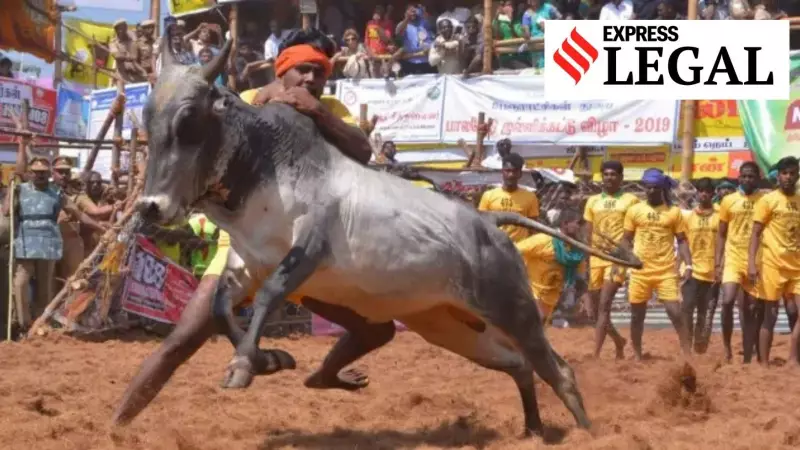
Madras High Court Rules State Government Sole Organizer for Jallikattu Festival
The Madras High Court has firmly stated that only the state government can organize the Jallikattu festival at Avaniyapuram. This decision comes due to the event's significant international recognition. A bench comprising Justices G Jayachandran and K K Ramakrishnan delivered this ruling while hearing a petition.
Court Disposes Petition Seeking Private Committee Permission
The court disposed of a petition filed by P Murugan, president of the Avaniyapuram Village Jallikattu Committee. Murugan sought directions for authorities to grant permission and provide police protection to conduct the festival. The petitioner argued that the local village committee should be allowed to organize the traditional event.
Senior advocate Meenakshi Sundaram, representing the petitioner, emphasized the importance of community participation. The counsel contended that the advisory committee should include collective representation from all village communities. This approach would ensure inclusiveness and prevent any group's exclusion.
State Government's Position and Legal Framework
Additional Advocate General Veera Kathiravan, representing the state government, strongly opposed the petition. The state submitted that under the Tamil Nadu Regulation of Jallikattu Act, 2009, and recent standard operating procedures, revenue officials organize the Avaniyapuram Jallikattu. Villagers merely assist the administration through an advisory committee.
The state highlighted that Jallikattu events at Avaniyapuram, Alanganallur, and Palamedu have acquired international importance. The government assured the court that the advisory committee would be constituted following established practice and previous judicial guidelines.
Key Findings and Court Order Details
The January 7 order clearly outlined several important findings:
- The state government itself directly organizes Jallikattu events at these internationally significant locations.
- Therefore, the petitioner cannot make an independent request for his committee to conduct the festival at Avaniyapuram Village.
- The court accepted the state's assurance regarding proper formation of the advisory committee.
- The writ petition has been disposed of, with connected miscellaneous petitions closed.
- No order has been issued regarding costs.
Background of Jallikattu and Cultural Significance
Jallikattu represents a centuries-old traditional sport held during Pongal harvest celebrations. It primarily occurs in Tamil Nadu districts including Madurai, Tiruchirappalli, Theni, and Sivagangai. Participants must cling to a bull's hump for a fixed distance or duration, testing both strength and skill.
Villages like Avaniyapuram, Alanganallur, and Palamedu have gained global recognition for hosting these events. Proponents view Jallikattu as a vital expression of Tamil cultural and agrarian heritage. The tradition is closely associated with conservation efforts for indigenous cattle breeds.
However, critics have consistently raised concerns about animal welfare and public safety risks associated with the sport. These concerns have led to various legal challenges and regulations over the years.
Legal Context and Previous Judicial Directions
The state government informed the court that the advisory committee would follow practices established in previous years. This formation would also adhere to guidelines issued by the high court in writ petitions decided on January 13, 2020. The court's acceptance of this assurance formed a crucial part of its decision.
This ruling reinforces the state government's central role in organizing major Jallikattu events. It particularly emphasizes events that have gained international prominence and recognition beyond local communities.
The decision underscores the balance between preserving cultural traditions and implementing proper regulatory frameworks. It also highlights the government's responsibility in managing events with significant public interest and international attention.