Kolkata's Historic Chinese School Seeks Court Help to Reclaim Building
The Pei May Chinese School in Kolkata has taken a bold step this week. School authorities approached the Calcutta High Court with a clear demand. They want their building back from Central Industrial Security Force personnel who have occupied it for eighteen long months.
A School Transformed into a Barracks
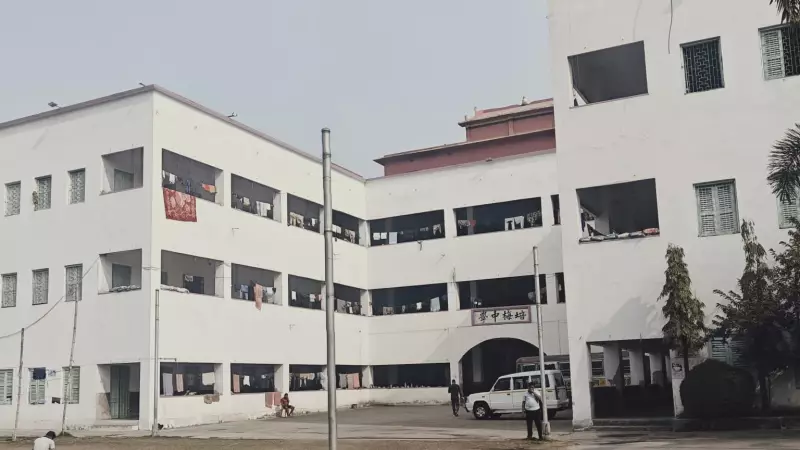
Walking through congested Tangra in Kolkata today, you encounter a striking scene. The heavy iron gates of the Pei May Chinese School still display faded purple Chinese characters. These characters spell the school's name, a reminder of its past glory. But beyond those decorative gates, the reality has changed dramatically.
The white, three-storey building no longer echoes with children's laughter. Corridors once filled with running students now stand quiet. The courtyard that hosted playful activities currently serves a different purpose. Rows of undershirts and fatigues hang out to dry everywhere. These belong to 150-200 CISF personnel who have made the school premises their home.

"It is our community school," says Monica Liu, wife of the school's president K C Liu. She serves as a leading voice for the Chinese community in Tangra. "In 1960, it received tax exemption from the Governor. Since that time, locals have run it as a charity school." Monica expresses visible distress about the current situation.
From Educational Hub to Security Post
Pei May Chinese School holds deep historical significance. The local Chinese community founded it and maintained it through donations. For decades, it functioned as the heartbeat of Kolkata's Chinatown. This area remains famous for its Indo-Chinese cuisine and leather tanneries.
Local residents recall better times. During the 1950s, more than 1,000 students filled the school's halls. The 1962 Indo-China war triggered changes. Decades of migration to Western countries followed. Student numbers dwindled to just a handful in recent years. Despite this decline, the school continued its charitable mission. It offered nearly free education to local children in Tangra.
Everything changed when the CISF arrived. All classes stopped immediately. The school building transformed into what residents now describe as "a fortified zone." Outsiders cannot pass through the gates anymore.
Broken Promises and Community Frustration
The school authorities opened their premises under specific circumstances. A court order followed unrest at R G Kar Medical College. This college sits approximately 5 kilometers away. A doctor's rape and murder there prompted security concerns. Authorities deployed CISF personnel to enhance security at the medical college.
School officials agreed to a temporary arrangement. The original agreement specified two months of CISF use. Eighteen months later, the personnel remain. "This cannot go on forever," states Michel, a local resident who preferred not to share her full name.
Monica Liu reveals she has written five or six letters to authorities. She has met officials personally too. Her goal remains simple: get the Pei May premises back. She has received no replies to her communications.
"When we objected, we received an explanation," Monica explains. "They told us many people live on the premises. Adjusting with few existing bathrooms became difficult. We felt shocked. We want our school back."
She claims modifications occurred without permission. These include setting up ten makeshift washrooms on the property.
More Than Just Classrooms at Stake
The school building served multiple community purposes beyond education. Pei May hosted local sports meets regularly. It became the central venue for celebrating Chinese New Year. This year, the New Year falls on February 16th. The approaching date adds urgency to the community's efforts.
Monica notes this is not the first time central forces have occupied the premises. Paramilitary personnel often take over during election periods. "Usually they came, stayed for fifteen days and left," she recalls. "This time differs. They are not telling us when they will leave."

A member of the Chinese-Indian community expresses deep concern. "Pei May holds our history and culture," the resident says. "Our community gave that space generously. Now it seems totally encroached. We fear it might disappear one day."
Political Awareness and Voter Roll Changes
Swarna Kamal Saha represents Entally as a TMC MLA. Tangra falls under his Assembly constituency among three others. He acknowledges awareness about CISF personnel staying at Pei May for over a year. However, he claims the community never approached him directly.
"I agree the deployment should not continue this long," Saha states. "If locals had informed us, I would have tried finding a solution."
Meanwhile, broader changes affect the Chinese community in Tangra. The Election Commission conducts a Special Intensive Revision of voter rolls. A study by Sabar Institute, a non-profit policy research body, reveals significant deletions. More than 400 Chinese-origin residents were removed from the first draft.
These deletions occurred across Kasba, Entally, and Chowringhee constituencies covering Tangra. Sources indicate most deletions happened because voters were "untraceable" or "absent."
A Chinatown resident speaking anonymously offers explanation. "We believe deletions happened because many community members moved abroad. Others relocated to different parts of India."
Restaurateur Lui, in his fifties, praises the revision exercise. "Panic existed before it started. Everything has been conducted smoothly."
Another resident, Joseph Chain, calls the roll clean-up long overdue. "Many people have died or left for China. Their names remained on the list until now."
Michael Cheng runs a local eatery. He agrees voter rolls should reflect current neighborhood reality.
A Community's Fading Presence
The 1962 Sino-Indian War triggered major changes. Mass internments occurred. The first significant wave of out-migration began. Since that period, many community members have died or left. Destinations included Canada and the United States.
"Out-migration shows the real picture of Chinatown," concludes Entally MLA Saha.
Advocate S N Panda represents the school in court. He highlights the community's enduring connection. "Many families with students here have moved out. They continue contributing to keep Pei May running. This matters deeply to their pride."
The fight for the Pei May Chinese School building continues. It represents more than physical space for Kolkata's Chinese community. This struggle symbolizes cultural preservation against gradual disappearance.