Kolkata's Chinese Community Takes Legal Action Against Extended CISF Occupation
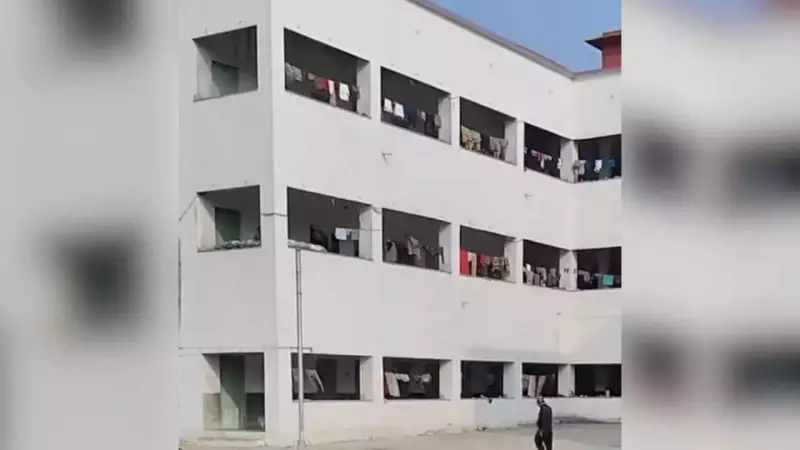
The historic Pei May Chinese High School in Kolkata's Tangra Chinatown has approached the Calcutta High Court seeking immediate vacation of its premises. Central Industrial Security Force personnel have occupied eighteen classrooms in the three-storey building for sixteen months without formal permission or payment.
From Temporary Arrangement to Prolonged Occupation
Entrepreneur Monica Liu, a prominent voice within Kolkata's Chinese community, revealed that government authorities initially requested temporary use of the school building for just two months. This request came following security concerns at RG Kar Medical College and Hospital after the August 2024 gang rape and murder of a junior doctor there.
"When Tangra police approached us about housing central forces for two months, we readily agreed," said Liu, who helps administer the school. "As Indians, we considered it our duty to assist the government during a difficult time."
However, no formal government letter preceded the actual takeover on September 16, 2024. The school authorities received only a requisition letter from the special commissioner of the state home and hills affairs department.
Community Center Disrupted
The school building serves multiple important functions beyond education. Since 2010, with dwindling student numbers due to migration of Chinese families abroad, the premises have transformed into a vital community space and place of worship.
"We immediately wrote to Nabanna officials the next day," Liu explained. "We clarified that while permitting two months' use, the building remains our community center and worship place. We specifically requested vacation before Chinese New Year 2025."
With another Chinese New Year approaching in February, the community needs access to their traditional space. Local clubs typically use the school grounds for practicing dragon dances and drum performances during the fortnight-long celebrations beginning February 12.
Financial Burden and Unauthorized Construction
School president KC Liu detailed additional complications arising from the prolonged occupation. The Public Works Department constructed ten toilets and ten bathrooms on school grounds without seeking proper authorization from school authorities.
Electrical infrastructure underwent modifications with additional points installed. Both the school's main meter and a newly installed sub-meter remain active, accumulating substantial unpaid bills.
"The unpaid electricity bill now exceeds four lakh rupees," the school president confirmed. "We sent multiple letters to state government officials but received no response. Legal action became our only recourse to reclaim this integral part of Kolkata's Chinese community and Hakka culture."
Court Proceedings Reveal Contradictions
Advocate Sachindananda Panda, representing the school, described recent court developments. During the January 2 hearing, CISF submitted an affidavit claiming expenditure of fifty lakh rupees to make the premises habitable.
Justice Krishna Rao questioned the authority behind these renovations and whether school permission was obtained. The judge then directed vacation of the school within forty-five days.
"Respondents argued that CISF cannot vacate while the RG Kar case remains pending before court," Panda stated. "Justice Rao asked them to produce any order justifying continued occupation sixteen months after a two-month agreement. The final hearing is scheduled for January 14."
Government sources indicated that state authorities had previously asked CISF to vacate the premises last year, but the force maintained its presence regardless.
Historical Significance and Future Hopes
Pei May Chinese High School was established in the late 1940s by community leaders including Lee Youn Chin. Its original purpose was teaching Chinese language and cultural traditions to local children.
During its peak years, the school educated over one thousand students. Enrollment declined significantly as many Chinese families, particularly younger generations, migrated to Canada, Australia, and other international destinations.
Recent efforts have focused on revitalizing the institution as a Chinese language and cultural studies center. The current legal battle represents not just a property dispute but a struggle to preserve cultural heritage and community space in Kolkata's diminishing Chinatown.