Khurshid Argues Bhojshala Petition Implicitly Claims Title Despite Wording
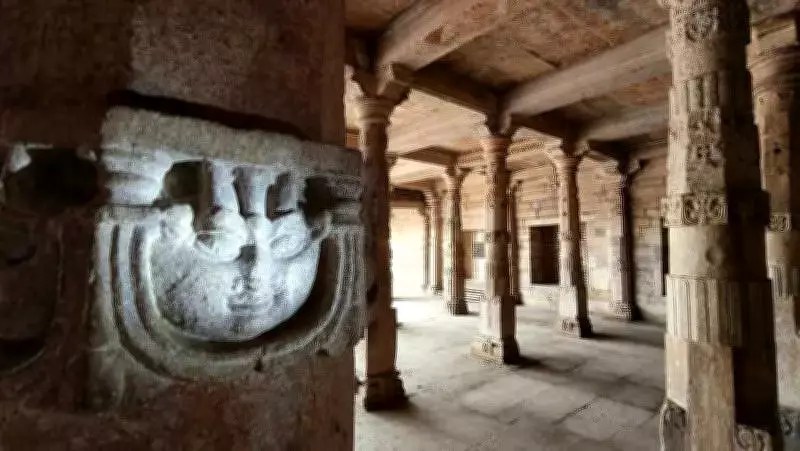
In a significant development at the Indore bench of the Madhya Pradesh High Court, senior advocate Salman Khurshid, representing the Maulana Kamaluddin Welfare Society, asserted on Wednesday that the petition filed by the Hindu Front for Justice in the Bhojshala temple-Kamal Maula mosque case fundamentally amounts to a title claim, irrespective of how it is phrased. Khurshid emphasized that even if the term 'title' is avoided through careful drafting, the substance of the claim remains one of ownership, challenging the petitioner's stance.
Court Observations and Legal Distinctions
The submission came after the bench, comprising Justice Vijay Kumar Shukla and Justice Alok Awasthi, pointed out that the petitioner's counsel, Vishnu Shankar Jain, had opened arguments by stating he was not seeking title. Justice Shukla noted, "His opening position was that this is not a claim for ownership." In response, Khurshid argued that if the petitioner is not claiming ownership or title, then the basis for approaching the court becomes unclear. He contended that the petitioner's challenge to the Archaeological Survey of India (ASI) order—which grants restricted access to both communities at the disputed site—implicitly rests on either a title claim or a claim rooted in faith and belief.
Khurshid elaborated on the doctrine of 'waqf by user', suggesting that arguments like 'once a temple, always a temple' implicitly amount to claiming title. He drew a critical distinction between this petition and the Ayodhya suit, noting that in the Ram Temple case, the deity Ram Lalla Virajman was itself a petitioner, along with a shebait or manager. In contrast, no such arrangement exists in the Bhojshala case, where there appears to be an assertion of a deity linked to the land where the mosque stands today.

Legal Principles and Archaeological Evidence
Khurshid further argued that juristic personality arises from an express dedication to a pious purpose, embodied in an idol as a legal representative. He submitted that while the purpose may survive even in the absence of an idol, land or structures do not acquire such personality merely due to religious association. He challenged the evidentiary weight placed on ASI findings, citing the Ayodhya verdict, where the Supreme Court identified an underlying non-Islamic structure but found no conclusive evidence of demolition and cautioned that archaeological reports must be read with caveats.
"ASI findings in the present case cannot, by themselves, determine title," Khurshid submitted, stressing that questions of ownership must be decided on settled legal principles and evidentiary standards applicable to civil trials, not on historical reconstruction. He noted insufficient evidence to establish that the site once housed a structure that was destroyed and replaced, but added that even if accepted, the fundamental legal question of ownership principles today remains paramount.
Reliance on the Places of Worship Act
Khurshid reiterated his reliance on the Places of Worship (Special Provisions) Act, 1991, stating that the statutory cut-off date of August 15, 1947, is decisive. He highlighted that the legislative intent, as recognized in the Ayodhya verdict, was to draw a line of closure over historical disputes and preserve the religious character of places of worship as they stood at independence. While acknowledging the statutory exception for ASI-protected monuments under Section 4, he argued that the pending challenge to the 1991 Act before the Supreme Court in Ashwini Kumar Upadhyay v. Union of India effectively keeps the matter in abeyance, limiting judicial intervention at this stage.
In conclusion, Khurshid emphasized that faith, historical claims, and archaeological inferences cannot displace settled legal principles governing title and religious character, underscoring the need for a legal resolution grounded in established norms rather than emotive or historical assertions.