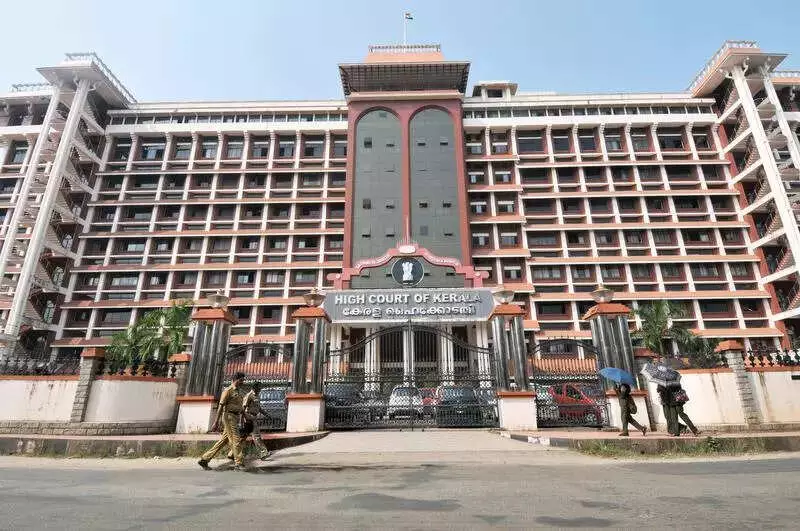
Kerala High Court Advocates for Judicial Control Over Corruption Prosecution Sanctions
The Kerala High Court made a significant oral observation on Monday. It stated that the power to grant sanction for prosecuting public servants under the Prevention of Corruption Act should lie with the courts. Specifically, this authority should rest with the high courts and the Supreme Court.
Court Criticizes Government Bias in Sanction Grants
Justice A Badharudeen expressed this view while hearing a contempt petition. The plea was filed by Kadakampally Manoj from Kollam. He alleged denial of prosecution sanction in a graft case against former Kerala State Cashew Development Corporation chairman R Chandrasekharan and others. This denial violated an earlier court order.
The High Court remarked orally that a troubling trend exists today. Prosecution sanction is often granted when the accused are opposed to the government. Conversely, no sanction is given when the accused are aligned with the government. The court emphasized this pattern is not limited to the present case. It is prevalent in other instances as well.
Call for Legislative Change or Judicial Intervention
The court further opined that legislation must confer this power upon the courts. If such legislation does not materialize, the Supreme Court may need to step in. It could exercise judicial intervention through a judge-made order to address the issue.
Background of the Cashew Corporation Graft Case
This case stems from allegations of large-scale corruption. The accusations involve the import and purchase of cashew nuts by the Kerala State Cashew Development Corporation. Earlier, following a High Court order on Manoj's petition, the CBI investigated the matter. The agency arraigned Chandrasekharan, former KSCDC managing director K A Ratheesh, and two others as accused.
Before filing its final report, the CBI sought prosecution sanction from the industries department under the Prevention of Corruption Act. However, the request faced repeated denials. This prompted the present contempt petition against industries department principal secretary A P M Muhamed Hanish.
Allegations of Fund Misuse and State's Defense
The High Court noted serious allegations in the case. The government had sanctioned Rs 80 crore for procuring cashew nuts for the KSCDC. A substantial portion of this amount was allegedly utilized for importing cashew nuts through private exporters. This included the fourth accused in the case.
Meanwhile, the state government opposed these allegations. It contended that the utilization of funds followed orders issued pursuant to a government policy decision. The norms of the store purchase manual were relaxed with adequate safeguards in place, according to the state.
Court's Frustration with Government Stance
The High Court observed that the state government received several opportunities to rectify its stance on granting prosecution sanction. Despite these chances, it continued to maintain the same position. The court recalled its earlier finding that merit existed in the case. It had held that a prima facie case of contempt was made out.
Despite these clear findings, the government showed unwillingness to correct its stand. The High Court criticized this persistent attitude. The single bench thereafter reserved orders on the petition and adjourned the case for further proceedings.