Kerala High Court Mandates Refund of Excess Enrollment Fees to Advocates
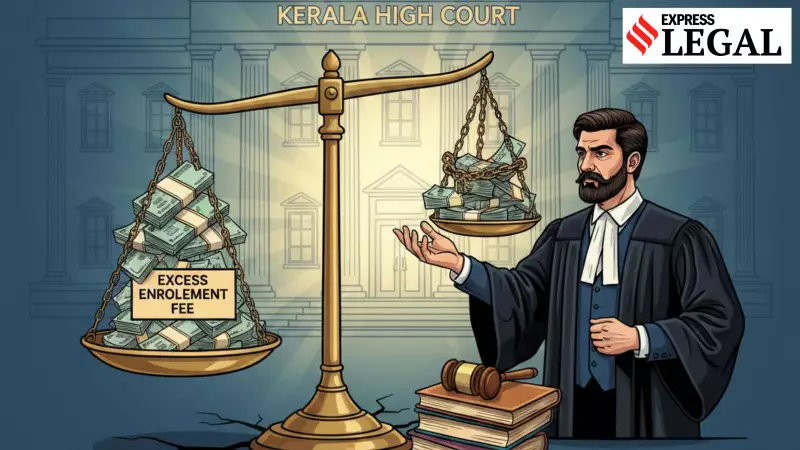
The Kerala High Court has issued a significant directive ordering the Bar Council of Kerala to refund excess enrollment fees collected from a group of advocates. This ruling comes in response to a petition filed by seven young advocates who challenged the additional charges imposed by the state bar council.
Legal Challenge Against Excessive Fee Collection
Justice Bechu Kurian Thomas delivered the judgment while disposing of a writ petition filed by the advocates. The petitioners alleged that the Kerala Bar Council had collected an extra Rs 5,000 from each of them during enrollment, which they claimed violated Section 24(1)(f) of the Advocates Act, 1961.
According to the statutory provisions, the prescribed enrollment fee is Rs 750 for general category candidates and Rs 125 for candidates from Scheduled Castes and Scheduled Tribes. The court emphasized that no amount beyond this legally mandated fee could be charged by the bar council.

Court's Directive and Legal Basis
In his order, Justice Thomas stated: "There will be a direction to the 1st respondent to return the excess fee collected from the petitioners immediately, at any rate, within a period of two weeks." The court's decision was influenced by the bar council's own admission in its counter affidavit that it would refund the excess amount if approached by the petitioners.
The judgment referenced the Supreme Court's 2024 ruling in Gaurav Kumar v Union of India, where it was established that state bar councils cannot collect fees exceeding the statutory limit. The apex court had emphasized that charging exorbitant fees undermines the dignity of aspiring advocates and creates barriers for those from economically disadvantaged backgrounds.
Background of the Case
The seven advocates, who are members of the Bar Council of Kerala, approached the High Court seeking relief from what they termed "excess" enrollment fees. They argued that the additional Rs 5,000 per person should be refunded, citing the Supreme Court precedent that clearly prohibits such overcharging.
In its response, the Bar Council of Kerala acknowledged the Supreme Court judgment and expressed willingness to refund the excess amount if formally approached by the petitioners. This admission significantly influenced the High Court's decision to issue the refund directive.
Broader Implications for Legal Profession
This case highlights ongoing concerns about fee structures within India's legal regulatory bodies. The Supreme Court had previously addressed similar issues, directing state bar councils and the Bar Council of India to develop fair and transparent fee collection methods that don't create financial barriers for law graduates.
The top court had observed that imposing excessive fees as a precondition for enrollment "denigrates the dignity of those who face social and economic barriers in the advancement of their legal careers." This principle of substantive equality formed the foundation for both the Supreme Court's earlier ruling and the Kerala High Court's recent decision.
Key Legal Provisions
The case centered on Section 24(1)(f) of the Advocates Act, which specifies:
- Enrollment fee of Rs 600 to the State Bar Council
- Additional Rs 150 to the Bar Council of India
- Total statutory fee of Rs 750 for general category advocates
- Reduced fee of Rs 125 for SC/ST candidates with proper certification
The Kerala High Court's ruling reinforces that state bar councils must strictly adhere to these statutory limits and cannot impose any additional "miscellaneous fees" or extra charges beyond what the law explicitly permits.