Karnataka High Court Rejects BJP MLA's Anticipatory Bail Plea in Real Estate Murder Case
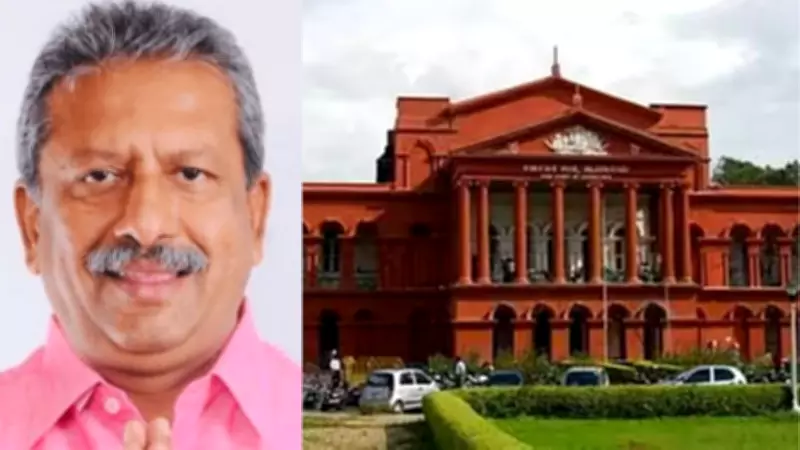
The Karnataka High Court has delivered a significant ruling by rejecting the anticipatory bail plea of BJP MLA Byrathi Basavaraj, who stands accused in a high-profile real estate dispute-linked murder case. The court's decision, handed down by a single-judge bench of Justice Sunil Dutt Yadav, has resulted in the cancellation of interim anticipatory bail previously granted to the 64-year-old legislator.
Murder Case Background and Legal Proceedings
The case centers on the murder of realtor V G Shivaprakash, also known as Bikla Shiva, a 44-year-old individual who was killed in East Bengaluru on July 15, 2025. The victim had a documented history of involvement in property disputes, including allegations of creating fake claims. To date, nineteen individuals have been arrested in connection with this brutal crime.
The legal journey has been complex, with the Criminal Investigation Department (CID) of Karnataka police initially invoking the stringent Karnataka Control of Organised Crime Act (KCOCA) on August 12, 2025. However, the Karnataka High Court quashed this application on December 19, 2025, citing insufficient evidence of organized criminal activity. The CID has since challenged this decision in the Supreme Court, which has indicated that the ruling should not serve as precedent in other cases.

Critical Evidence: The Kumbh Mela Connection
During court proceedings, the prosecution presented compelling evidence that proved crucial to the bail rejection. Special Public Prosecutor B N Jagadeesh submitted a detailed analysis of mobile Call Detail Records (CDR) and geo-mapping data that revealed a close association between MLA Byrathi Basavaraj and key accused individuals.
The most damning evidence emerged from records showing that the BJP MLA traveled to Prayagraj for the Kumbh Mela between February 10 and 12, 2025, on the same flight and with identical tickets as prime accused Jagadish (alias Jaga), Kiran K, and Ajith Kumar. This directly contradicted the MLA's earlier statement to police during July 2025 interrogation, where he claimed no knowledge of or association with these individuals.
Mobile tower location data further confirmed that the accused persons were physically present with the MLA at the same locations on multiple occasions, both before and during the alleged plotting of the murder. The prosecution argued that this evidence demonstrated a deliberate attempt to mislead investigators.
Legal Arguments and Prosecution's Case
The CID presented several key arguments during the bail hearing:
- The vacation bench of the High Court had improperly granted interim bail in December 2025, as no provision for interim bail exists under the Bharatiya Nagarik Suraksha Sanhita (BNSS)
- The MLA had already exhausted his right to seek anticipatory bail after previous interim protection was withdrawn
- Mobile evidence proved the MLA's close association with accused persons, despite his claims to the contrary
- The victim's mother had testified about threats from the MLA and associates, though she later retracted her police statement under alleged pressure
- Local police failed to register FIRs despite the victim filing complaints in February and March 2025 about threats to his life
Special Public Prosecutor Jagadeesh emphasized that "this is a classic case of frustrating investigations and the judicial process" and argued that custodial interrogation was necessary because "he is not an ordinary person."
Defense Arguments and Court's Decision
The BJP MLA's counsel countered that the CID should have challenged the interim bail in the Supreme Court if aggrieved by the December 2025 order. They also noted that their client was not named in any remand applications or the first chargesheet, and had cooperated fully with the investigation.
However, Justice Sunil Dutt Yadav's bench found the prosecution's evidence compelling enough to reject the anticipatory bail plea. The court had reserved its verdict on January 29 after extensive arguments, ultimately ruling against the MLA's petition on Tuesday.

This ruling represents a significant development in a case that has drawn considerable public attention due to the involvement of a sitting legislator, allegations of police collusion, and the brutal nature of the real estate dispute that led to murder. The evidence from the Kumbh Mela trip proved particularly damaging to the MLA's defense, providing concrete proof of association with accused individuals that contradicted his earlier statements to investigators.