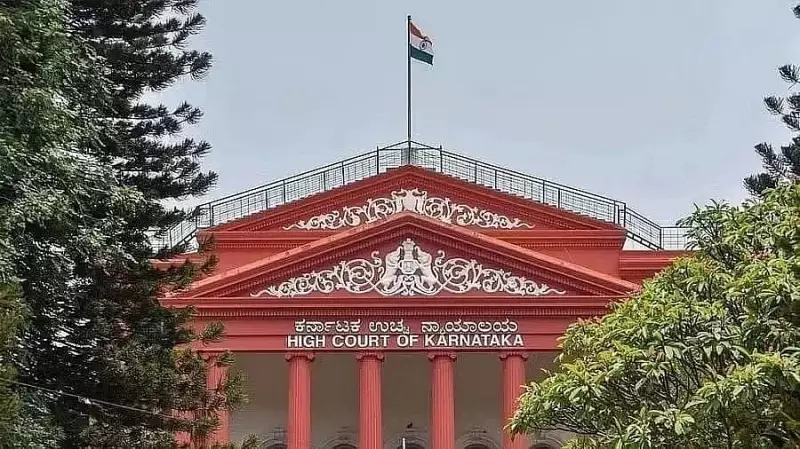
In a significant ruling that promotes legal mobility across state boundaries, the Karnataka High Court has issued a clear directive to the Karnataka State Bar Council (KSBC). The court has instructed the council to properly consider applications filed by law graduates who completed their education in other Indian states.
Court Hearing Reveals National Registration Rights
During the recent court proceedings, the counsel representing the Bar Council of India made a crucial submission. The counsel explicitly stated that no restrictions exist preventing law graduates from practicing in states other than where they studied.
The legal representative emphasized that any person who has graduated from any law college across the country possesses the right to register with any State Bar Council. This right is firmly established under Section 24 of the Advocates Act, which governs legal practice throughout India.

Legal Framework Supporting Mobility
The court's decision reinforces the fundamental principle that legal education and practice rights should not be confined by state boundaries. Section 24 of the Advocates Act serves as the cornerstone of this nationwide approach to legal practice authorization.
This provision ensures that qualified law professionals can seek registration in any state where they wish to practice, regardless of their educational institution's location. The Karnataka High Court's directive now makes this theoretical right a practical reality for aspiring advocates.
Implications for Legal Profession
This ruling carries substantial implications for the legal community across India. Law graduates now have clear confirmation of their rights to practice anywhere in the country without facing arbitrary state-based restrictions.
The decision, dated November 8, 2025, represents a victory for legal mobility and professional freedom. It ensures that state bar councils cannot create additional barriers beyond those specified in the national Advocates Act.
This judgment is expected to streamline the registration process for thousands of law graduates annually, creating a more unified and accessible legal profession throughout India.