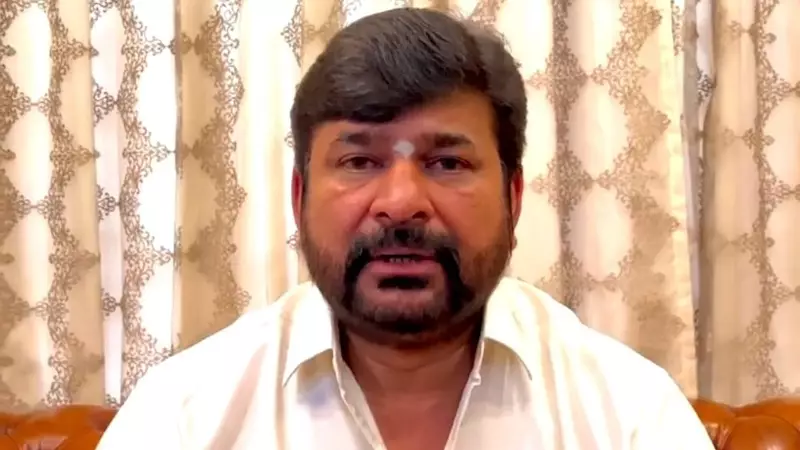
Karnataka High Court Rejects Bail Plea of Congress MLA Vinay Kulkarni in Murder Case
The Karnataka High Court has firmly denied bail to Congress MLA Vinay Kulkarni, who stands accused in the high-profile murder case of BJP zilla panchayat member Yogesh Gowda. In a significant ruling delivered on Tuesday, the court emphasized that granting bail would contravene judicial propriety, especially after the Supreme Court had previously cancelled his bail on serious grounds of witness tampering.
Judicial Propriety Takes Center Stage
A bench presided over by Justice S Sunil Dutt Yadav articulated a clear stance, stating that it would be inappropriate for any court to reconsider and grant bail to an accused individual after the apex court has cancelled it due to violations of bail conditions. This principle underscores the judiciary's commitment to maintaining the integrity of legal proceedings and respecting higher court decisions.
The bench remarked, "The petitioner is to re-approach the Apex Court and make out an appropriate case instead of the current exercise of having approached the trial Court and this Court once again." This directive highlights the necessity for Kulkarni to seek relief directly from the Supreme Court, rather than pursuing repeated applications in lower courts.
Background of the Case and Supreme Court's Intervention
Vinay Kulkarni, a three-time legislator representing Dharwad, is among the 21 individuals accused in the 2016 murder of Yogesh Gowda. Although the Supreme Court had initially granted him bail in 2021, this relief was short-lived. Following an application by the Central Bureau of Investigation (CBI), which is spearheading the investigation, the apex court cancelled his bail. The cancellation was predicated on allegations that Kulkarni had attempted to influence prosecution witnesses, a serious breach of bail conditions that undermines the judicial process.
Special Public Prosecutor P Prasanna Kumar, representing the CBI, reinforced this point during the proceedings. He referenced the Supreme Court's ruling, noting that the court did not grant Kulkarni the liberty to seek fresh bail when it cancelled his original bail. This legal nuance plays a crucial role in the high court's decision to deny the current petition.
Arguments Presented by the Defense
Senior Advocate C V Nagesh, representing Kulkarni, presented several arguments in favor of granting bail. He contended that all material witnesses, including those allegedly influenced by Kulkarni, had already been examined by the prosecution before the trial court. This, he argued, reduced the risk of further witness tampering.
Nagesh also pointed out that co-accused individuals in the case, whose bail was revoked on similar grounds, had subsequently been released. Additionally, he emphasized Kulkarni's clean criminal record and his status as a respected legislator, suggesting that these factors should weigh in favor of bail.
Legal Distinction: Rejection vs. Cancellation of Bail
The high court drew a critical distinction between two scenarios: when a bail application is rejected on its merits versus when bail is cancelled due to violations of imposed conditions. Justice Yadav clarified that while a "change in circumstances" might justify re-approaching the court in the former case, this principle does not apply in the latter.
"The court has not recorded any finding regarding the merits of the claim and has merely disposed of the petition, holding that the petitioner is required to have approached the Apex Court itself," the high court stated. This indicates that the decision was based on procedural propriety rather than an assessment of the case's factual merits.
Implications and Next Steps
The rejection of Kulkarni's bail petition by the Karnataka High Court sets a significant precedent, reinforcing the authority of Supreme Court decisions and the importance of adhering to bail conditions. It also underscores the judiciary's vigilance in cases involving allegations of witness tampering, which can severely compromise the fairness of trials.
For Vinay Kulkarni, the path forward now lies with the Supreme Court. He must present a compelling case to the apex court, demonstrating why fresh bail should be considered despite the previous cancellation. This development adds another layer to the ongoing legal battle in the Yogesh Gowda murder case, which continues to attract public and political attention.
The case remains a focal point in Karnataka's legal and political landscape, highlighting the intricate interplay between law, politics, and judicial oversight. As the proceedings advance, all eyes will be on the Supreme Court's next move in this protracted and contentious matter.