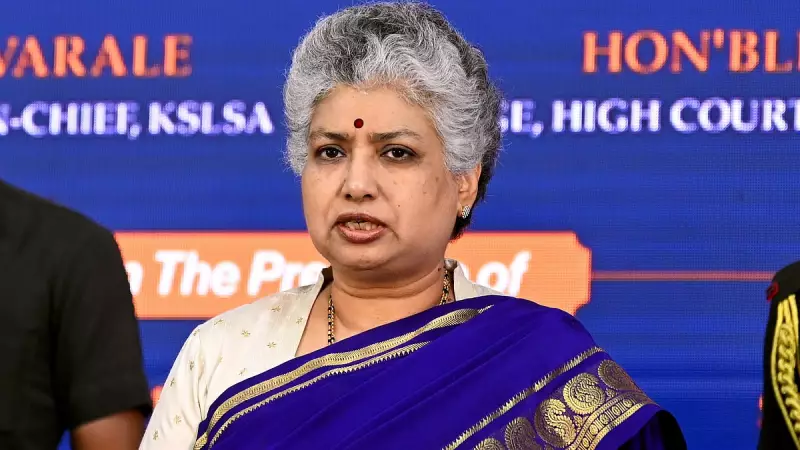
Justice Nagarathna Stresses Importance of Judicial Finality
In a significant statement reinforcing the stability of India's legal system, Supreme Court Justice B.V. Nagarathna has emphasized that judicial judgments should not be reopened simply because the composition of judges has changed over time. The observation came during court proceedings on November 29, 2025, where Justice Nagarathna articulated the fundamental principle that verdicts must maintain their authority regardless of subsequent changes in the judiciary.
The Principle of Judicial Certainty
Justice Nagarathna articulated that an evolved understanding of judicial independence requires the legal system to provide assurance that once a judgment is rendered, it remains anchored in time. She powerfully stated that proper judgments are written in 'ink and not in sand', highlighting their permanent nature and the importance of maintaining legal certainty in the Indian judicial process.
The Supreme Court justice's remarks underscore a critical aspect of judicial functioning where the finality of decisions must be respected to maintain public confidence in the legal system. This principle becomes particularly relevant in cases where multiple benches might hear different aspects of the same matter over extended periods.
Implications for India's Legal Framework
Justice Nagarathna's observations carry significant weight for the future of judicial proceedings across India's court system. Her statement serves as a reminder that:
- Judicial decisions must withstand the test of time
- Legal certainty is fundamental to justice delivery
- The system must protect judgments from arbitrary reconsideration
- Judicial independence includes protection of rendered verdicts
The timing of this statement is crucial as it reinforces the Supreme Court's commitment to maintaining consistency and predictability in legal outcomes. This approach ensures that litigants can rely on judicial decisions without fearing that verdicts might be easily overturned due to administrative changes in court composition.
Justice Nagarathna's emphasis on judgments being written in 'ink and not in sand' provides a powerful metaphor for the permanence that should characterize judicial pronouncements in India's evolving legal landscape.