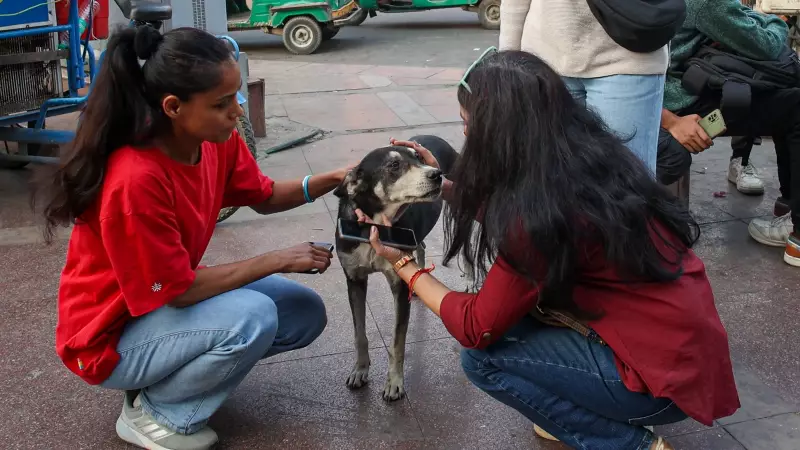
The Jawaharlal Nehru University (JNU) campus in Delhi is facing an emotional crisis following the Supreme Court's recent order to remove stray dogs from public premises. The decision has left students, staff, and animal caregivers grappling with how to implement the ruling for dogs they consider family members.
Campus Dogs as Family Members
At 6 pm on Friday, eight-year-old Alpha, affectionately called Golu, makes his daily journey to the campus health center for his evening nap. The stray dog has become an integral part of the health center's daily life, sleeping under chairs during summer to enjoy the AC and beneath cots during winter for warmth.
"He pushes the gate open himself at night and comes inside - he is like our child," says Dharamveer, a 32-year-old housekeeping staff member. He recalls how a professor had abandoned Golu on campus when the dog was very young, and the entire staff has since adopted him as their own.
Akshay Lal, a 40-year-old ambulance driver, echoes the sentiment: "If he is quiet, we know that he is feeling unwell. How will we let him go?" The emotional attachment to these campus dogs runs deep among the university community.
Organized Animal Care System
JNU boasts a well-established Animal Welfare Society headed by Vipul Jain, who also founded the PAWS foundation and serves on the JNU animal birth control committee. According to Jain, approximately 280 to 300 dogs live on the campus based on a survey conducted in July, with 85% of them already sterilized through systematic animal birth control programs.
"We have rescued not only dogs but also porcupines, lizards, birds, and peacocks," Jain explains. "We believe that humans and animals can co-exist peacefully." The average age of stray dogs on campus is around 10 years, with the oldest dog, Chuchu, having lived over 20 years before dying in a motorcycle accident in 2023.
Community Feeding and Care Network
Seventy-year-old Jasbir Kaur, a resident of nearby DDA flats in Munirka, exemplifies the community's dedication to these animals. She feeds approximately 50 dogs daily between the university's main gate and Narmada dormitory. "If you start playing a dhol here, all dogs will come out from the forest and follow us," she says, noting how accustomed the dogs have become to campus life.
Kaur and other feeders have established fixed areas and timings for feeding. Around 4 pm each day, dogs gather at the Ganga bus stop even before she arrives, demonstrating their familiarity with the routine. The dogs have individual preferences - some enjoy chicken and rice while others refuse to eat without milk.
Every day, Kaur pulls a cart filled with food packets specifically prepared for dogs and cats. "We need to cater to their needs," she smiles as Golu's friend Kaalu approaches her for his meal.
Student Perspectives on Coexistence
Sarmi Sinha, a 34-year-old PhD student in Chinese language residing at Ganga Hostel, assists Kaur in sterilizing campus dogs. She describes how dogs like Bruno and Kaalu maintain their positions outside hostel gates without entering the buildings.
"When aunty (Kaur) comes, the dogs leave the campus, eat, and return to their spot outside the hostel," Sinha explains. She expresses concern about the Supreme Court order, stating that "it seems like we are forcefully trying to impose our wish on creatures who cannot speak for themselves."
While students come and go from hostels like Ganga Girls and Jhelum Boys, strays such as Bruno, Kaalu, and Foxy have become permanent residents of the campus ecosystem. The potential implementation of the Supreme Court order threatens to disrupt this carefully balanced coexistence that has developed over years.