Gujarat Police Probe Widens in IVF-Linked Child Trafficking Racket Across Cities
The investigation into a disturbing alleged child-trafficking racket connected to IVF centers has significantly expanded, with Gujarat police officers now placing several fertility clinics in Pune under intense scrutiny. This development follows the initial uncovering of a network that primarily sourced children from tribal regions of Gujarat and Rajasthan.
Network Promised "100% Guarantee" of Childbirth to Couples
According to Gujarat crime branch officers, the illicit operation marketed a "100% guarantee" of childbirth to childless couples, exploiting their desperation. The probe was initiated after police discovered evidence that children were allegedly selected and sold based on specific criteria including skin color, gender, and age. Clients of certain IVF centers in Pune and Hyderabad reportedly preferred newborns whose physical features closely resembled their own, driving a demand that traffickers sought to fulfill.
Key Suspect Emerges: Nurse with Multi-City Connections
A nurse who previously worked at multiple IVF centers and gynaecology hospitals in Ahmedabad and Hyderabad has emerged as a key suspect in the case. Crime branch sources indicate she acted as a crucial link between medical facilities in Hyderabad, Pune, and Ahmedabad. After leaving her professional position, she allegedly began directly approaching childless couples, using her medical background and knowledge of IVF procedures to gain their trust and persuade them to purchase newborns.
Through a network of intermediaries, she allegedly coordinated the identification and supply of children matching specific requirements. "These IVF centers guarantee a child. In cases where the couple is unable to conceive, the traffickers offer, within the same package or at a higher cost, to provide a newborn," explained a senior crime branch officer.
Targeting Tribal Belts: Exploitation of Poverty and Social Change
The trafficking network specifically targeted vulnerable families in remote tribal pockets of north Gujarat and west Rajasthan. Agents operated in these rural areas, taking advantage of poverty and evolving social norms. Families were allegedly offered sums ranging from Rs 5 lakh to Rs 15 lakh, with the price heavily dependent on the child's complexion, gender, and age.
- A fair-complexioned newborn boy commanded the highest price.
- Girls and children with darker complexions were sold for considerably lower amounts.
Police estimate that at least 20 tribal children have been trafficked and sold to buyers in Hyderabad over the past two years. The children were sourced from specific tribal areas including:
- Poshina, Kheroj, and Idar in Sabarkantha district
- Danta and Deesa in Banaskantha district
These families typically had limited access to healthcare and low levels of education, making them particularly vulnerable to exploitation.
Exploiting Shifting Social Norms Within Tribal Communities
Senior officers revealed that traffickers also capitalized on changing social norms within tribal communities. "Till a couple of decades ago, unwed women bearing children were not unusual among tribals," noted a senior officer. "But now, there is a change in belief systems. Children born out of wedlock carry a stigma. Traffickers used this vulnerability and projected the sale of a child as an opportunity."
Racket Uncovered During Airport Interception
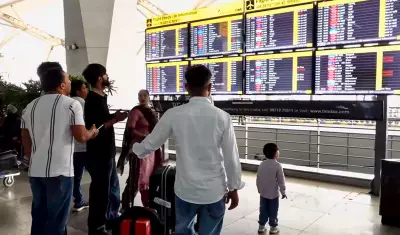
The entire racket came to light on January 29, when four accused individuals travelling from Himmatnagar were intercepted near Ahmedabad airport. They were allegedly transporting a 15-day-old infant to Hyderabad for resale, leading to the initial arrests and the subsequent widening of the investigation across multiple cities and IVF centers.