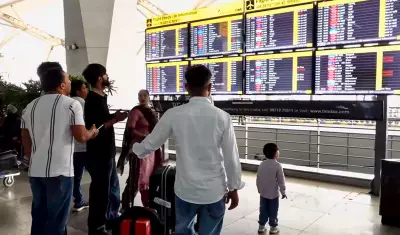
Iran-Israel Crisis Sparks Eid Travel Uncertainty for Coastal Karnataka NRIs
The escalating crisis between Iran and Israel has cast a shadow over the Eid-ul-Fitr travel plans of numerous Non-Resident Indians (NRIs) hailing from coastal Karnataka. With airspace disruptions spreading across West Asia, fears are mounting over potential flight delays, rerouting, cancellations, and limited availability, just as the festive season approaches.
Festive Rush Meets Geopolitical Turmoil
Eid-ul-Fitr, anticipated around March 19 or 20, typically marks the busiest travel period of the year for expatriates. The annual rush usually begins a week to ten days prior to the festival, when NRIs finalize their itineraries to return home, and airlines boost capacity on key routes. However, this year, travel agents and passengers report a significant slowdown in ticket bookings. Many are holding off, waiting for clearer updates on route stability and airline schedules amid the ongoing geopolitical tensions.
"Every year, I travel to Mangaluru with my family a week or ten days before the festival," shared an expatriate businessman. "But this year, with just two weeks left for Eid and airspace closures, our plans may not work out. We may have to celebrate the festival in Saudi Arabia itself."
Travel Adjustments and Economic Concerns
In Saudi Arabia, Ramadan continues without major disruption, with offices and businesses operating as usual. However, Mohammed Ashif, CEO of Expertise Company in Saudi Arabia, noted that many travellers are rescheduling or postponing trips. They are opting for later dates and waiting for more reliable flight availability before confirming bookings.
Ansar Katipalla, an NRI working in Oman, highlighted the recurring issue of fare spikes during festive periods. "It's a long-standing issue that airlines take advantage of us during these times, charging three to four times the normal fare," he said. "Unfortunately, this remains unaddressed. Despite this, those who can afford it will still travel to celebrate with loved ones." He added that while Oman has not seen major disruptions yet, the current crisis has created widespread uncertainty.
Katipalla also warned of potential wider economic fallout, citing possible supply chain disruptions in Gulf countries that import most of their goods. He emphasized that the situation is already affecting businesses run by expatriates and could push ticket prices higher even if flights resume. Similar concerns were echoed by expatriates in Bahrain, where travellers are closely tracking advisories and possible changes to flight schedules.
Potential Solutions and Broader Impacts
Travel agents suggest that special flights could be introduced if regular operations remain constrained by airspace restrictions. In such scenarios, travellers on visit visas or those stranded in transit are likely to prioritize the earliest available flights. Meanwhile, resident and work visa holders may consider special flight options depending on urgency.
A worker based in Kuwait explained that many expatriates typically spend ten days of Ramadan in Saudi Arabia visiting religious sites. They either celebrate Eid there before returning to work or travel onwards to their hometowns. However, the current situation may disrupt these cherished plans, adding to the anxiety during a time meant for family reunions and celebration.
As the Iran-Israel crisis unfolds, the travel uncertainty underscores the broader challenges faced by NRIs from coastal Karnataka, balancing festive traditions with geopolitical realities.