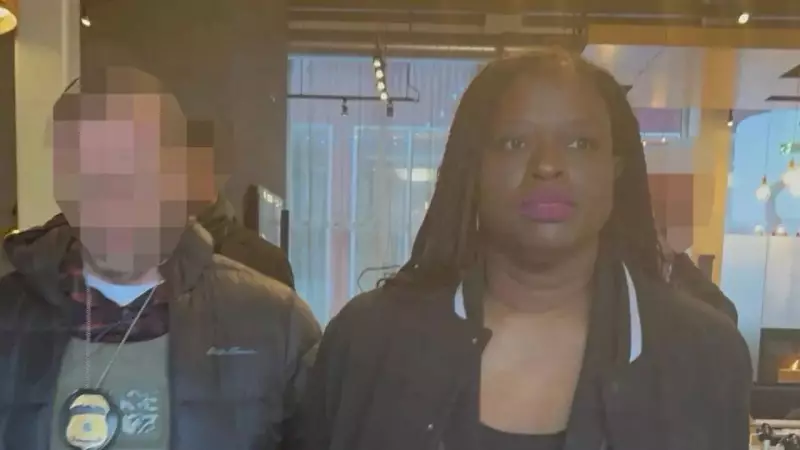
Minnesota Church Service Disrupted in ICE Protest, Two Activists Arrested
Attorney General Pam Bondi announced on Thursday the arrests of two prominent Minnesota activists in connection with a disruptive protest at a St. Paul church where a local U.S. Immigration and Customs Enforcement (ICE) official serves as pastor. The incident has intensified ongoing tensions between federal immigration authorities and community organizers in the region.
Arrests of Prominent Community Figures
Bondi confirmed the arrest of Nekima Levy Armstrong, a well-known local activist and ordained pastor who previously served as president of the Twin Cities chapter of the NAACP and ran for mayor of Minneapolis in 2017. Additionally, authorities arrested Chauntyll Louisa Allen, an elected member of the St. Paul School Board who played a key role in establishing the Black Lives Matter Twin Cities chapter.
Sunday Service Disruption at Cities Church
The protest occurred on Sunday when a group entered the Cities Church in St. Paul during regular services. Participants began chanting "ICE out" and "Justice for Renee Good" before the service was forced to end prematurely. One of the church's pastors, David Easterwood, leads the local ICE field office, making the location a symbolic target for immigration protesters.
Background of Rising Immigration Tensions
The demonstration represents one of numerous protests that have emerged across the Twin Cities metro area and Greater Minnesota following the fatal shooting of US citizen Renee Good by an ICE agent in south Minneapolis earlier this month. This incident has sparked renewed conflict between more than 3,000 federal immigration officers operating in Minnesota and community activists.
The Minnesota-Wisconsin Baptist Convention described the church disruption as "an unacceptable trauma," noting that protesters directed insults and accusations at youth, children, and families during the service. The organization expressed deep concern about the violation of sacred space.
Broader Context of Immigration Enforcement Policies
The current tensions reflect broader national debates about immigration enforcement. Many faith leaders expressed dismay when the government announced last January that federal immigration agencies could make arrests in churches, schools, and hospitals, effectively ending previous protections for people in sensitive spaces.
While no immigration raids during church services have been reported, some Minnesota churches have posted notices on their doors explicitly stating that no federal immigration officers are allowed inside. Others have reported significant drops in attendance, particularly during periods of heightened enforcement activity.
Political Dimensions of the Conflict
The Trump administration and Minnesota officials have traded blame for the heightened tensions, with each side accusing the other of escalating the situation. The arrests of two high-profile activists with established community leadership roles suggests the protest movement is gaining organized momentum against ICE operations in the region.
This incident highlights the complex intersection of immigration policy, community activism, and religious spaces in contemporary American society, particularly in regions experiencing increased federal immigration enforcement actions.