The Himachal Pradesh Police is meticulously examining the digital footprints, personal paintings, and medical records of a 19-year-old Dalit student who died on December 26, 2025. The investigation seeks to unravel how the young woman, described as a talented painter and dancer, allegedly descended into severe depression leading to her death within four months, following accusations of sexual assault and ragging at her Dharamshala college.
A Tangled Web of Allegations and Changing Narratives
The case, which has triggered national attention and action from the University Grants Commission (UGC) and the National Commission for SC/STs, presents unique complexities for the Special Investigation Team (SIT). A key challenge is the evolving nature of statements from all parties involved. "Statements of everyone involved, including the kin of the victim, are changing from one day to another, giving the case a new twist," revealed an SIT member.
This confusion deepened with a recent social media video posted by one of the four accused college mates. In it, she claims the alleged ragging incident occurred in 2024 by a final-year student, contradicting the family's assertion that it happened in September 2025. This claim, reportedly based on what the deceased student told her, conflicts with video evidence recorded by the victim's relatives in the hospital where she spoke of harassment in September. The SIT acknowledges being in a bind, unable to dismiss either narrative outright.
The Family's Anguish and a Trail of Medical Treatment
The probe began after the student's father filed a complaint on the Himachal Chief Minister's Helpline on December 30. An FIR now names five individuals: four college mates and an assistant professor, the latter suspended on January 4 and facing sexual assault charges. While the victim was Dalit, three accused are from SC/ST communities, and the professor belongs to an OBC group.
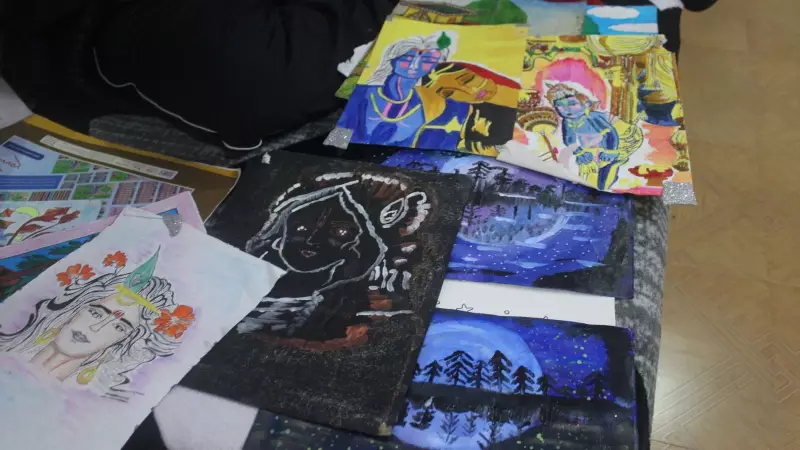
The victim's family, residing in a hamlet near the new Himachal Vidhan Sabha building, remembers a vibrant young woman. Her father, a 49-year-old property dealer, shared poignant details, including paintings of Lord Krishna she made. He recalled buying her new jeans and a sweater in November to lift her spirits during a hospital stay in Ludhiana. "She seemed almost fine, so happy about the clothes. She insisted she would wear them then and there," he said.
Her mother, 44, emotionally described the affection her daughter evoked from medical staff across the at least six hospitals where she was treated between September and her death, even receiving gifts like earrings from a nurse. The family has been visited by officials including the Himachal Women Commission chairperson and the Youth Services Minister, who connected them via video call with Chief Minister Sukhvinder Singh Sukhu.
A College Under Scrutiny and Voices of the Accused
The British-era co-educational college, which was preparing for its anniversary, is now swarming with officials from the UGC and state's Higher Education Directorate. The college principal, in charge for one-and-a-half years, stated no formal ragging complaints were received during his tenure. The institution has an anti-ragging helpline and an internal committee for sexual harassment complaints, as per UGC norms.
The accused students have expressed fear that the allegations will ruin their lives, citing personal struggles like academic failure or the loss of a parent. One accused described the deceased as "introverted, but good at dancing," and denied any ragging. Another student, unaware of the victim personally, echoed that the charges were surprising in the college's open environment. Meanwhile, the Old Students' Association has been consulted by probe committees on improving academic standards.
Kangra Superintendent of Police Ashok Ratan emphasized the core question driving the investigation: determining how a talented young woman fell into such profound despair. With the body cremated before the police probe began, the SIT is relying heavily on digital evidence, medical history reviewed by a special doctor's panel, and the difficult task of piecing together a truth obscured by trauma and conflicting accounts.