High Court Upholds Equal Pay Principle for Haryana Power Officers
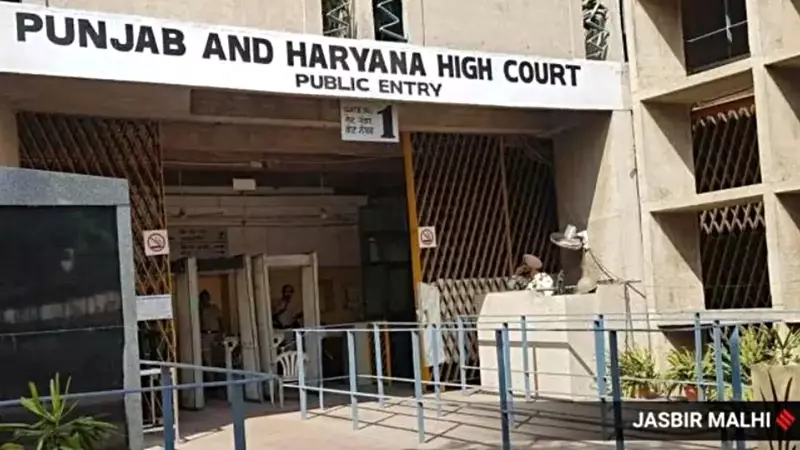
The Punjab and Haryana High Court delivered a significant ruling on Thursday. Justice Harpreet Singh Brar quashed a 2016 decision that withdrew an approved pay hike for finance, audit, and accounts officers in Haryana's power utilities. The court emphasized the constitutional right to equal pay for equal work.
Court Directs Fresh Review Within Six Weeks
Justice Brar directed the Board of Directors of Dakshin Haryana Bijli Vitran Nigam Limited to reconsider the pay revision issue afresh. The board must communicate a reasoned decision to the affected officers within six weeks of receiving the court order.
The judgment disposed of five connected writ petitions filed by employees of three power utilities:

- Dakshin Haryana Bijli Vitran Nigam Limited
- Haryana Vidyut Prasaran Nigam Limited
- Haryana Power Generation Corporation Limited
Petitioners included Naresh Kumar, Jagjeet Singh Kushwaha, Sumit Goyal, D.N. Singh, and Rajinder Verma among others.
Background of the Pay Dispute
The dispute originated after the reorganization of the Haryana State Electricity Board into separate successor entities. In 2009, a coordination committee recommended higher pay scales for accounts officers to bring them on par with engineering cadres.
DHBVNL's board approved this proposal on November 25, 2009. However, authorities did not implement it after referring the matter to the Haryana Bureau of Public Enterprises.
In 2016, the board withdrew the approval entirely. Officials cited financial constraints as their primary reason.
Court's Reasoning on Equal Pay Principle
The petitioners challenged the withdrawal by highlighting a crucial fact. Their counterparts in Uttar Haryana Bijli Vitran Nigam Limited were already drawing the revised pay scales. Courts had upheld a similar approval for UHBVNL up to the Supreme Court level.
Justice Brar noted several key similarities between employees of both utilities:
- Common recruitment process
- Identical qualifications
- Same job duties and profiles
The court delivered a strong statement on the constitutional dimension. "The plea of separate legal identity, in the face of common recruitment, identical job profiles, and a statutory framework designed for parity, cannot be accepted to defeat the constitutional guarantee of equal pay for equal work," the judgment stated.
Financial Considerations Cannot Override Constitutional Rights
Justice Brar observed that the 2016 withdrawal relied primarily on financial considerations. However, it completely failed to address the fundamental principle of parity between similarly situated employees.
The court also clarified the legal position regarding a 2020 amendment. This amendment requires bureau approval for pay revisions in public enterprises. The court held that this provision operates prospectively only. Therefore, it could not be used to block the 2009 decision that preceded it.
Specific Directions from the Court
The High Court issued clear directions while disposing of the petitions:
- The 2016 withdrawal order stands quashed
- The matter returns to DHBVNL's Board of Directors for fresh consideration
- The board must reconsider the grievance while accounting for parity issues
- They must note that counterparts in UHBVNL receive higher scales for identical work
- A reasoned decision must reach petitioners within six weeks of order receipt
This ruling reinforces the constitutional protection for employees performing similar work under comparable conditions. It establishes that financial constraints alone cannot justify unequal pay when all other factors remain identical.