Punjab and Haryana High Court Mandates Comprehensive Police Training on Legal Complaint Procedures
In a significant judicial intervention, the Punjab and Haryana High Court has identified serious procedural lapses in the filing of Kalandra (police complaints) within the state of Punjab. The court has issued a directive to the Director General of Police (DGP) of Punjab, mandating the institutionalization of a comprehensive sensitization program for all police officials across the state. This initiative aims to ensure strict adherence to the mandatory provisions of Section 215 of the Bharatiya Nagarik Suraksha Sanhita (BNSS), which was previously known as Section 195 of the Code of Criminal Procedure (CrPC).
Court's Concern Over Frivolous Complaints and Procedural Neglect
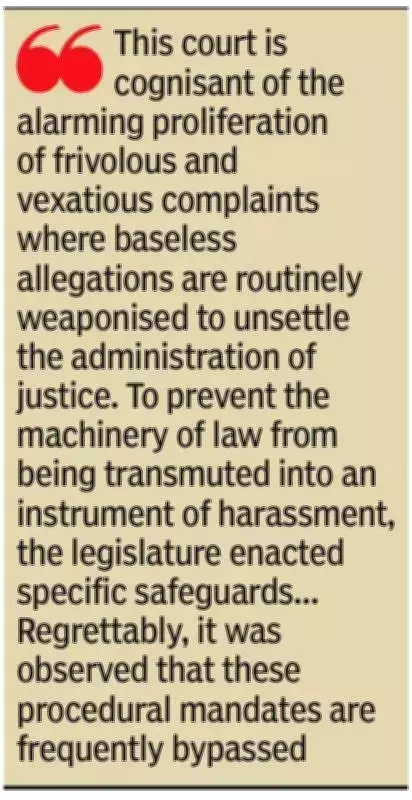
The High Court expressed deep concern over what it described as an alarming proliferation of frivolous and vexatious complaints. In its observations, the court noted that baseless allegations are increasingly being weaponized to disrupt the administration of justice. "This Court is cognisant of the alarming proliferation of frivolous and vexatious complaints where baseless allegations are routinely weaponised to unsettle the administration of justice. To prevent the machinery of law from being transmuted into an instrument of harassment, the legislature enacted specific safeguards… Regrettably, it was observed that these procedural mandates are frequently bypassed or treated with a sense of casual indifference," the court stated.
To address this issue, the High Court has ordered the DGP of Punjab to ensure compliance with its directions within a strict timeframe of six months. This move is intended to reinforce legal protocols and prevent the misuse of judicial processes for harassment purposes.
Case Background: Quashing of Proceedings Against Ludhiana Resident
The High Court passed these orders while quashing criminal proceedings initiated against Vinod Kumar, also known as Akhtar, a resident of Ludhiana. Kumar had been accused of making false allegations against a public servant. The court ruled that the case was filed in violation of mandatory legal procedures, specifically highlighting a jurisdictional defect.
The defect arose because the complaint was filed by a Station House Officer (SHO) instead of the competent authority as required by law. Justice Sumeet Goel, who presided over the case, allowed Kumar's petition challenging the Kalandra registered under Section 66 of the Punjab Police Act, 2007. The proceedings had been pending before the Judicial Magistrate First Class (JMIC) in Ludhiana.
Details of the Ludhiana Case and Inquiry Process
Vinod Kumar, who described himself as a social worker, had initially submitted representations to authorities alleging the misuse of an Other Backward Class (OBC) certificate by an individual who secured government employment. He sought an official inquiry into the matter. The concerned welfare authorities examined the complaint but concluded that there were no grounds to cancel the certificate.
Undeterred, Kumar pursued the matter further by submitting additional representations to senior police officials. Following these complaints, an inquiry was conducted at the office of the Commissioner of Police in Ludhiana. The inquiry report reportedly concluded that the allegations were unsubstantiated and that the complaint cast aspersions on a judicial officer. Based on this report, the police initiated proceedings against Kumar and filed a Kalandra before the magistrate.
Court's Ruling on Jurisdictional Authority and Procedural Compliance
After hearing the arguments, Justice Goel made a critical observation regarding the jurisdictional authority. The court noted that since the original complaint was made to senior authorities and the inquiry was conducted at that level, any subsequent legal action should have been initiated by the same authority or a superior one, not by a lower-ranking officer like an SHO.
Furthermore, the court pointed out that the magistrate issued notice in a routine manner without properly examining the statutory bar under Section 195 CrPC (now Section 215 BNSS). This oversight contributed to the procedural lapse that led to the quashing of the proceedings.
The High Court's directive emphasizes the importance of strict procedural compliance in legal matters to uphold justice and prevent abuse of the legal system. By ordering a sensitization program for police officials, the court aims to foster a culture of accountability and adherence to legal standards within Punjab's law enforcement agencies.