Rajasthan High Court Upholds Pension Rights for Nata Vivah Wives
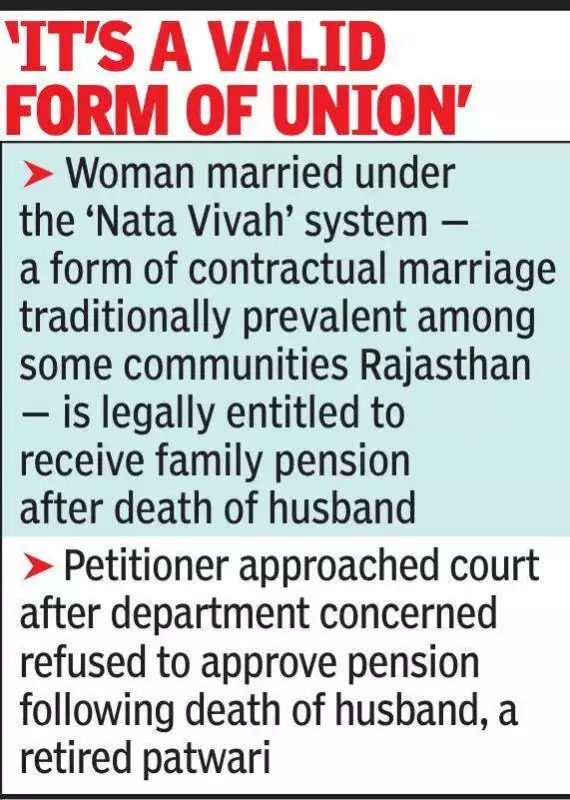
The Rajasthan High Court delivered a landmark judgment this week. It affirmed the legal rights of women married under the traditional Nata Vivah system. The court stated these women are fully entitled to receive family pension after their husband's death.
Court Directs State to Grant Pension to Widow
A single bench of Justice Ashok Kumar Jain issued this significant ruling on January 16. The bench allowed a writ petition filed by Ram Pyari Suman, a 60-year-old widow. Justice Jain directed state authorities to treat Suman as the lawful wife of the deceased Puran Lal Saini.
Saini was a retired government servant who worked as a patwari. He passed away in 2020. Following his death, the concerned department refused to approve Suman's pension application. This refusal forced her to seek legal recourse through the High Court.
Understanding the Nata Vivah Tradition
Nata Vivah represents a form of contractual marriage. It has been traditionally prevalent among certain communities in Rajasthan. This system allows couples to enter into a marital union through mutual agreement, often without elaborate ceremonies.
The court's decision specifically references the Rajasthan Civil Services (Pension) Rules of 1996. Justice Jain's order mandates that authorities release Suman's pension under these rules. This establishes an important precedent for similar cases across the state.
Legal Recognition of Traditional Marriages
This ruling provides crucial legal validation for women in Nata Vivah marriages. It ensures they receive financial security through family pension benefits. The judgment clarifies that such marital relationships deserve equal recognition under pension regulations.
The case highlights how traditional marriage systems interact with modern legal frameworks. By upholding Suman's petition, the High Court has strengthened social security for women in non-conventional marital arrangements. This decision could impact numerous families who follow the Nata Vivah tradition in Rajasthan.