High Court Grants Exemption to Middle-Aged Haryana Police Personnel from Demanding Training
In a significant ruling, the Punjab and Haryana High Court has provided substantial relief to 36 middle-aged police officers from Haryana, directing state authorities to exempt them from a physically grueling promotional training course. The court's decision came after the petitioners, aged between 39 and 45 years, expressed willingness to permanently forgo all promotion-related benefits.
Background of the Case
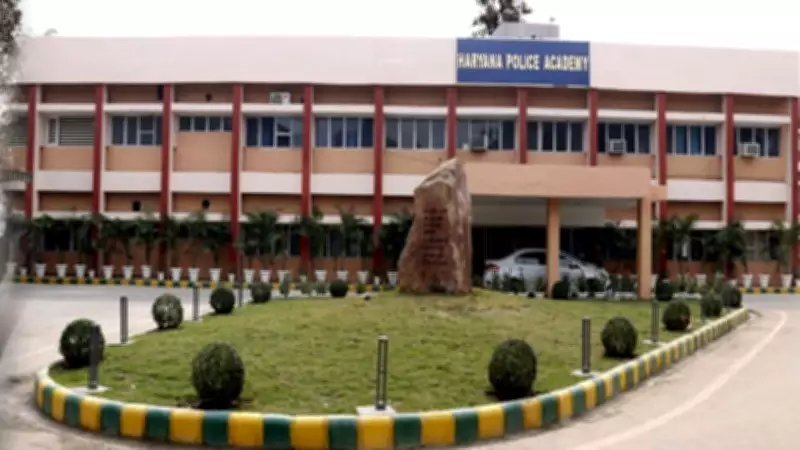
The matter, titled EHC Amit Kumar and others v State of Haryana and others, was adjudicated by Justice Jagmohan Bansal. The petitioners—comprising constables, head constables, and assistant sub-inspectors—were selected under a 35 percent reserved quota for the List-B1 Lower School Course of 2022. This training was scheduled to commence on February 2, 2026, at the Haryana Police Academy in Madhuban.
These officers are posted across multiple districts including Karnal, Panipat, Rohtak, Faridabad, Gurugram, Sirsa, Jhajjar, Fatehabad, Palwal, Bhiwani, Mahendragarh, Rewari, Charkhi Dadri, Hisar, Kurukshetra, and Ambala. Most hold ranks as Exemptee Head Constable or Exemptee Assistant Sub-Inspector, with one serving as a Constable.
Petitioners' Arguments and Health Concerns
The police personnel challenged their selection list issued on January 28, 2026, on grounds of age and physical feasibility. They argued that while they were below 38 years when the promotional list was originally prepared, they are now approximately 40 to 45 years old. The petitioners submitted that the course involves rigorous physical training that would be excessively strenuous and potentially harmful to their health.
They emphasized that such training would be unproductive for both the officers and the police department, particularly considering domestic, medical, and family responsibilities. All 36 officers had formally declared unwillingness to undergo the course, supported by notarized affidavits stating they would permanently relinquish any claim to seniority, promotional benefits, and financial upgradations under the Assured Career Progression (ACP) scheme.
Legal Precedent and Court's Reasoning
Advocate Balkar Singh, representing the petitioners, relied on Rule 14 of the Haryana government notification dated October 28, 2016, which outlines grounds for cessation of ACP entitlement. The case was squarely covered by the judgment in ESI Sandeep Kumar and others v State of Haryana and others (CWP No. 24483 of 2025), decided on September 4, 2025. In that ruling, similar relief had been granted to a batch of Exemptee Sub-Inspectors.
The 2025 precedent held that personnel who expressly decline interest in promotion cannot be compelled to undergo promotional training courses, especially when physical demands are high and age-related hardships are pleaded alongside irrevocable waivers of associated benefits. The reasoning focused on the fact that the Lower School Course is primarily a prerequisite for promotional eligibility and career progression benefits.
When officers voluntarily relinquish those benefits and express no desire for promotion, compelling them to undergo rigorous training serves no practical purpose for either the individual or the department. Forcing participation in such circumstances would be unreasonable.
Court's Directive and State's Response
The state, represented by Deputy Advocate General Ravi Partap Singh, did not dispute the applicability of the precedent. Accepting the submission, the court disposed of the petition with a direction to the respondents to consider the petitioners' claim in terms of the earlier judgment. This ruling underscores the judiciary's recognition of age-related physical limitations and the principle that voluntary waiver of benefits should preclude mandatory training obligations.
The decision highlights important considerations for police administration regarding training policies for middle-aged personnel. It also sets a significant legal benchmark for similar cases where physical demands of training may conflict with health and personal circumstances of older employees.