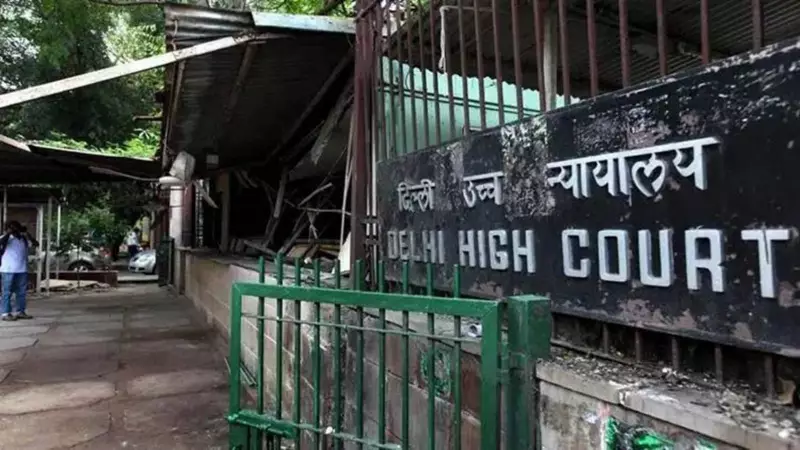
The Delhi High Court has taken strong exception to a significant delay in the pronouncement of a judgment in a case under the stringent Maharashtra Control of Organised Crime Act (MCOCA), directing the sessions court judge to deliver the verdict within weeks. The court set aside an order that had mandated a fresh hearing of final arguments by a new judge, noting that the trial had concluded over five months ago.
Court's Stern Directive on Delayed Judgment
In an order passed on January 6, 2026, Justice Swarana Kanta Sharma of the Delhi High Court directed the sessions court judge to pronounce the judgment in the MCOCA case within two to three weeks. The High Court's intervention came after it noted that the sessions judge had failed to comply with a standing order issued by the Chief Justice regarding the delivery of judgments upon transfer.
The case involves accused gangster Parvesh Mann alias Sagar Mann, who was tried under sections 3 and 4 of MCOCA for conspiring, committing, or facilitating organised crime. The trial stemmed from a 2019 FIR lodged by the Delhi Police Special Cell.
Timeline of Judicial Procrastination
The sessions court had reserved its judgment on July 4, 2025, after concluding the trial, and initially fixed July 30, 2025 for pronouncing the verdict. However, the order was not pronounced on that date or on four subsequent dates. On November 7, 2025, the court deferred the pronouncement again, directing the accused to be produced physically. It then listed the matter for November 28, 2025.
Before this date arrived, the presiding judge was transferred on November 18, 2025. The successor judge then passed an order directing that the final arguments in the case be heard afresh. Challenging this, Parvesh Mann moved the High Court, pleading that the case be sent back to the original judge solely for pronouncing the verdict that had been reserved for months.
HC Cites CJ's Order and BNSS Mandate
Justice Sharma, in the order, recorded that judicial proceedings cannot oscillate between readiness and uncertainty, especially after a trial concludes. "To now compel the accused to undergo another round of final arguments before a new judge would amount to prolonging uncertainty and, in effect, would result in serious prejudice," the judge observed.
The High Court relied on transfer instructions issued by Delhi High Court Chief Justice DK Upadhyaya, which mandate that transferred judicial officers must deliver judgments in cases where verdicts are reserved, either on the scheduled date or within 2–3 weeks thereafter. The court noted that the predecessor judge had complied with neither these instructions nor the directions laid down by the HC in a July 2025 judgment on the same issue.
Furthermore, the Bench took into account the provisions of the Bharatiya Nagarik Suraksha Sanhita (BNSS), which mandate that judgments be pronounced within 30-45 days of the conclusion of the trial—a timeline that was also not adhered to in this instance.
The prosecution had argued that the delay occurred because clarifications were needed from the investigating officer, and thus the order for a fresh hearing was valid. The High Court, however, found this justification insufficient to override the clear mandates and the accused's right to a timely verdict.