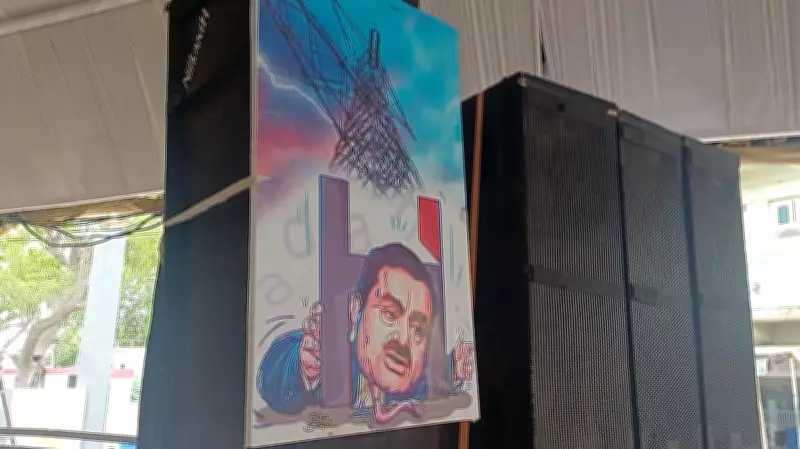
Farmers in Gujarat have intensified their resistance against power lines being laid by Adani Power, arguing that the acquisition of their land should not benefit a private company. The farmers, organized under various local groups, have been protesting for months, demanding that the project be halted unless it serves a public purpose rather than private profit.
Background of the dispute
The conflict centers on high-voltage transmission lines that Adani Power is constructing to evacuate electricity from its coal-fired plant in Mundra. The lines cross agricultural land in several districts, including Kutch and Morbi. Farmers claim the towers and cables will reduce their cultivable area and damage crops, affecting their livelihoods. They also argue that the project primarily benefits Adani's commercial interests, not the broader public.
According to sources, the Gujarat government has stepped in to address the impasse. In a recent development, the state agreed to pay farmers 100% of the compensation amount upfront, rather than in instalments as originally planned. This move is seen as an attempt to ease tensions, but farmer leaders say it does not address their core objection.

Farmers' demands and state response
"We are not against development, but this land is our lifeline. The power lines are for a private company's profit, not for the public good," said a farmer leader from Morbi district. The farmers have demanded that the project be reclassified as a public infrastructure initiative, which would allow for different compensation terms and stronger oversight.
The state government, however, maintains that the project is essential for strengthening the power grid and that it has followed due process. "Compensation has been enhanced, and we are committed to addressing genuine concerns," a government official said, speaking on condition of anonymity.
Impact and next steps
If the standoff continues, it could delay the transmission line, affecting power supply from the Mundra plant. Adani Power has not publicly commented on the protests. The farmers have threatened to escalate their agitation if their demands are not met, including blocking construction work. Negotiations are ongoing, with both sides hoping for a resolution before the next sowing season.