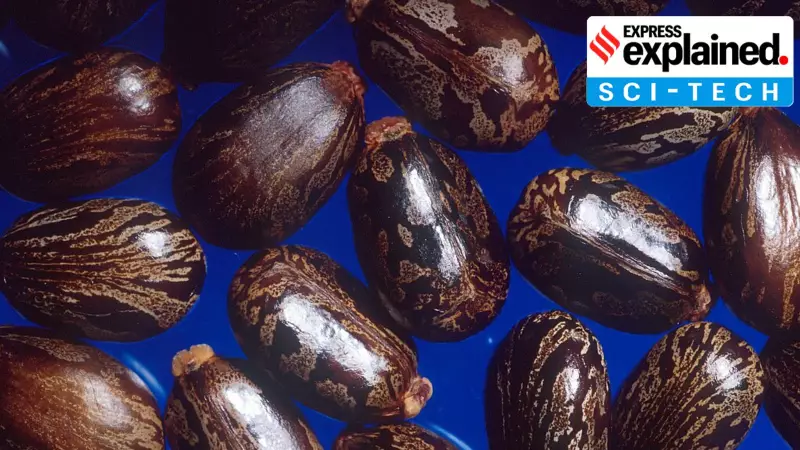
In a significant counter-terrorism operation, the Gujarat Anti-Terrorist Squad has apprehended three individuals, including a man claiming to be a doctor with a Chinese medical degree, for allegedly attempting to produce the deadly chemical compound ricin. The arrests last week uncovered what authorities believe was an active terror plot targeting key locations across multiple states.
The Alleged Terror Plot and Targets
According to investigative agencies, the accused had conducted detailed surveillance of several high-profile locations before their capture. The targeted sites included the Rashtriya Swayamsevak Sangh office in Lucknow, the Agriculture Produce Market Committee in Azadpur, Delhi, and the fruit market in Naroda, Ahmedabad. The choice of crowded public spaces indicates the potential for mass casualties had the plot succeeded.
Law enforcement officials highlighted that the relative ease of producing ricin, combined with the extremely small quantities needed to cause fatalities, makes this substance particularly dangerous and challenging to detect. The case has raised alarms about the accessibility of biological weapons to non-state actors.

What Makes Ricin So Deadly?
Ricin represents one of nature's most potent toxins - a protein naturally occurring in castor beans. These beans are widely cultivated industrially in countries including India, Brazil, and China for castor oil production. While the seeds contain 30% to 60% castor oil, ricin accounts for approximately 1% to 5% of the solid residue's weight.
Dr. YK Gupta, former head of the National Poison Information Centre at AIIMS, New Delhi, explained the grave danger: "The plant is widely available, and the poison is not very difficult to extract from the seeds. Yet, the substance can be very lethal. Even 1 mg mixed in food can kill an adult."
The mechanism of ricin's deadly effect involves its ability to bind with ribosomes - the cellular structures responsible for protein synthesis. Once attached, ricin effectively halts protein production in cells, leading to cellular death and, depending on exposure levels and method, potentially causing multiple organ failure.
Exposure Methods and Symptoms
The effects of ricin poisoning vary significantly based on the exposure method. When ingested, victims typically experience severe vomiting and diarrhea, which may become bloody, along with low blood pressure. In more severe cases, patients can suffer hallucinations, seizures, and ultimately multi-organ failure leading to death.
If injected, ricin can cause complete shutdown of multiple organ systems. Inhalation exposure results in respiratory distress, including breathing difficulties, coughing, and chest tightness. Dr. Gupta noted that while deliberate exposure is the primary concern, accidental poisoning can occur, particularly in children who might swallow castor beans. However, he clarified that the hardy seed coating usually prevents poisoning unless the seed is cracked or chewed.
Treatment Challenges and Historical Context
One of the most concerning aspects of ricin poisoning is the absence of any specific antidote or targeted treatment. Medical care focuses entirely on managing symptoms and supportive measures. "If someone comes in early enough, then vomiting may be induced to remove the poison. The stomach may also be washed to do so," Dr. Gupta explained. However, he emphasized that by the time most patients reach medical facilities, the toxin has typically been absorbed, leaving doctors to manage the resulting symptoms.
The diagnostic challenge is compounded by ricin's rarity - most physicians wouldn't initially suspect ricin poisoning when a patient presents with relevant symptoms, potentially delaying appropriate care.
Ricin's military potential has been recognized for decades. The United States studied it as a chemical warfare agent toward the end of World War I, though stability and aerosolization problems limited its practical application. Limited weaponization occurred during World War II, and Iraq attempted to develop it as an inhalable aerosol in the 1980s, according to documentation from the Organisation for the Prohibition of Chemical Weapons.

Today, ricin is classified as a Schedule 1 toxin under the Chemical Weapons Convention, placing it in the highest risk category alongside nerve agents like sarin gas and blister agents such as mustard gas. The most infamous criminal use occurred in 1978, when Bulgarian dissident journalist Gorgi Markov was assassinated in London using a ricin-filled pellet fired from an umbrella.
The recent Gujarat case underscores the ongoing threat posed by easily producible biological toxins and highlights the critical importance of vigilant counter-terrorism operations in preventing potential mass-casualty events.