Egyptian Tour Guide Arrested for Drawing on Ancient Pyramid of Unas
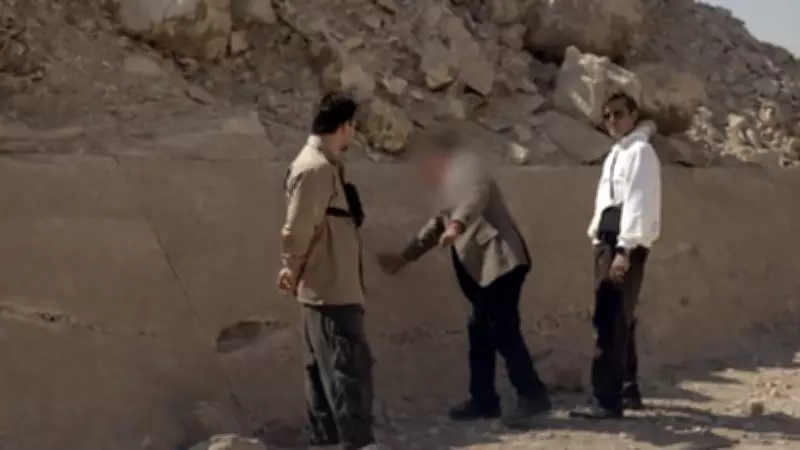
A tour guide has been apprehended by Egyptian authorities following a disturbing incident at the historic Pyramid of Unas, where he was caught on video drawing directly on the ancient stone exterior. The event occurred at the Saqqara necropolis, located south of Cairo, and has triggered a formal investigation by the Egyptian Ministry of Interior. This development was first reported by Egypt Today, highlighting the severity of the act.
What Happened at the Saqqara Site
According to an official statement from the Ministry of Interior, the Saqqara Tourist Police Station received a report from a local antiquities inspector. The inspector detailed that the guide had made markings on the outer casing stones of the pyramid while conducting a tour for a group of tourists. Authorities have condemned this behavior as a blatant distortion of an archaeological monument, which is part of the UNESCO World Heritage-listed Saqqara site.
The markings were subsequently removed by relevant authorities to prevent permanent damage. A video that circulated widely on social media captures the guide using chalk to draw lines and simple explanatory sketches directly onto the stone blocks during his explanation. The footage was filmed by an Egyptian visitor, identified on social media as Mahmoud Etman.
In the video, the visitor calmly confronts the guide, informing him that his actions are inappropriate. The guide responds defensively, questioning the filmer and insisting that the stones he marked were merely added blocks from restoration work, not original ancient stone. The exchange escalates into a tense argument with raised voices, underscoring the gravity of the situation.
Arrest and Legal Proceedings
The Ministry of Interior confirmed that the accused guide was arrested following the incident. During questioning, he admitted to committing the act, leading to the initiation of legal proceedings. Under Article 45 of Egypt's 1983 Antiquities Law, individuals who write on or inscribe an antiquity face imprisonment of no less than one year, along with a potential fine of up to 500,000 Egyptian pounds.
This legal framework is designed to protect Egypt's rich cultural heritage, and the case serves as a stark reminder of the consequences for violating these regulations. Authorities have not yet released further details about the ongoing legal process, but the arrest underscores their commitment to enforcing heritage protection laws.
Identity and Background of the Guide
Multiple Arabic media sources and social media posts have described the guide as a Russian tour guide, with some reports naming him as Rami Al-Amir. It remains unclear whether he is a foreign guide or an Egyptian-licensed guide leading a Russian-speaking group. During the filmed confrontation, he reportedly claimed to be a doctor, adding another layer of intrigue to his background.
The case has garnered significant public attention due to the cultural importance of the Pyramid of Unas and the strict legal protections surrounding Egypt's archaeological sites. This incident highlights the need for vigilance in preserving such invaluable historical monuments.
Public Reaction and Cultural Impact
The video has sparked widespread criticism online, with many social media users expressing anger over what they perceive as disrespect toward Egypt's cultural heritage. Numerous individuals praised Mahmoud Etman, the visitor who filmed and confronted the guide, for his proactive stance. Others have called for stricter monitoring of tour guides at archaeological sites and stronger enforcement of heritage protection laws.
This case has reignited debates about preservation standards at major tourist destinations and the responsibilities of licensed guides when handling sites of historical significance. It underscores the ongoing challenges in balancing tourism with conservation efforts in culturally rich regions like Egypt.
Historical Significance of the Pyramid of Unas
The Pyramid of Unas is one of Egypt's most historically significant monuments, dating back to the Old Kingdom and approximately 4,400 to 4,500 years old. It is widely recognized as the earliest pyramid to contain pyramid texts, which are ancient religious inscriptions. Built for Pharaoh Unas, who ruled from around 2375 to 2345 BCE, it stands as the final royal pyramid of Egypt's Fifth Dynasty.
The complex, originally named "Beautiful are the Places of Unas," includes a mortuary temple, causeway, and valley temple. The Pyramid Texts inscribed on its walls are considered the oldest religious texts in existence and have influenced later funerary works such as the Book of the Dead. This historical context amplifies the outrage over the recent incident, as any damage to such a site threatens a priceless link to ancient human civilization.