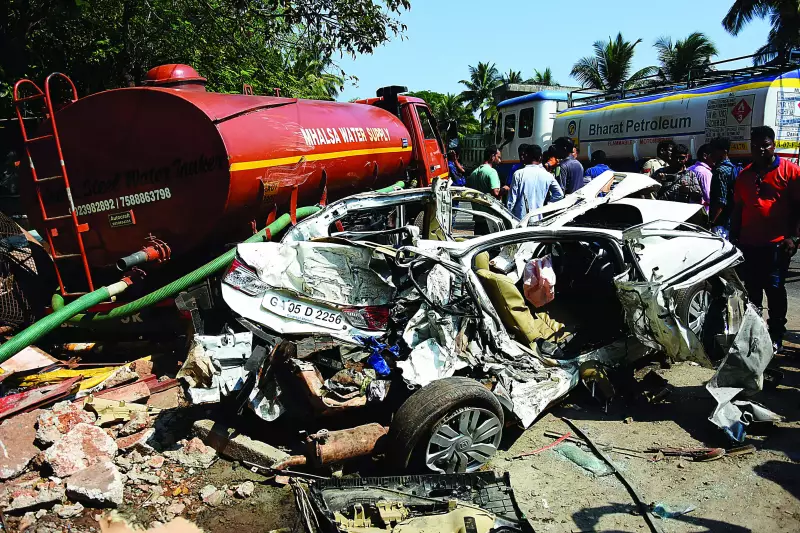
Goa Witnesses Alarming Surge in December Road Fatalities
The month of December 2025 brought grim news for road safety in Goa. Official police statistics reveal a significant jump in fatal accidents and deaths on the state's roads. The data shows 29 fatal accidents occurred, resulting in 30 tragic deaths. This marks a concerning increase from the figures recorded in December of the previous year, which stood at 23 fatal accidents and 24 deaths.
Understanding the Statistics and the Sudden Spike
Police clarify that a 'fatal road accident' is any crash that leads to a loss of life. The term 'road deaths' simply counts the total number of people who died in such incidents. The sharp rise in these numbers last December has raised serious alarms.
Authorities point to two primary factors for this sudden deterioration. First, the peak tourist season led to a substantial increase in traffic movement across the state. Second, and more critically, the government decided to scale back enforcement. Chief Minister Pramod Sawant made the call to withdraw police personnel who were specifically tasked with issuing challans for traffic violations.
This decision came after the government received numerous complaints about harassment, particularly from lower-ranking police officers deployed for traffic management duties.
A Year of Contrasting Trends for Goa's Roads
The story of 2025 is one of promising progress followed by a worrying reversal. The year began on a positive note. In the first quarter, Goa saw a notable 23% decline in fatal accidents and a 25% drop in road deaths. This was a welcome change after many years where, on average, one person died in a road crash every single day.
However, this positive momentum did not hold. By the final quarter of the year, the reduction had narrowed dramatically. The improvement was just 6% for fatal accidents and 7% for road deaths, signaling a major setback for traffic safety efforts.
Police Initiatives and Ongoing Challenges
Goa police had set an ambitious target for 2025: to reduce fatal accidents by 10%. In pursuit of this goal, the traffic cell was active. Until November, they booked over a lakh of people for various traffic violations. This vigorous enforcement contributed to an overall reduction in violations of about 47%.
Beyond penalties, the police also focused on education. The traffic cell intensified its awareness campaigns, conducting programs in schools, colleges, and village panchayats. They held more than 700 lectures, successfully educating over 40,000 people on the importance of following traffic rules.
Recognizing that infrastructure plays a key role, the traffic cell proactively wrote to the Public Works Department (PWD). They sought both short-term and long-term measures to help reduce accidents on Goa's roads.
Pinpointing the Dangerous Hours
An analysis of accident data from 2024 provided crucial insights. It revealed that the maximum number of crashes occurred between 6 PM and 7 PM. A senior police officer explained this trend, noting, "A higher number of accidents occur after office hours as everyone is in a hurry to get home." This finding highlights the need for targeted safety measures during the evening rush hour.
The situation in Goa underscores a complex challenge. While enforcement and education are vital, balancing them with public sentiment and managing seasonal tourist influxes remains difficult. The December spike serves as a stark reminder that road safety requires constant vigilance and adaptable strategies.