A Week of Global Upheaval: From Tehran to New Delhi
The world witnessed significant developments this week, with events unfolding rapidly across continents. From ongoing anti-government protests in Iran to diplomatic maneuvers involving Greenland and a new chapter in India-Afghanistan relations, international dynamics experienced notable shifts.
Iranian Regime Faces Unprecedented Protests
Anti-government demonstrations in Iran have spread to over 180 cities across all 31 provinces. The protests began on December 28, 2025, initiated by traders in Tehran, and have grown into the largest uprising since the 1979 Islamic Revolution.
Authorities have responded with brutal force, resulting in significant casualties. Human rights groups report between 2,500 and 12,000 protesters killed during three weeks of unrest. Security forces have detained more than 18,000 individuals participating in the demonstrations.

Iranian authorities implemented the longest internet shutdown in the country's history on January 8, 2026, ahead of their crackdown. While telephone services have resumed, internet access remains blocked nationwide. Some activists use Starlink terminals to bypass restrictions and share footage of the violence, but authorities actively pursue these workarounds.
Trump's Evolving Stance on Iran Intervention
US President Donald Trump initially threatened military intervention in Iran if protesters faced violence. He reinforced this position in subsequent statements, prompting similar rhetoric from Iran regarding potential retaliation against US allies in the Middle East.
On Thursday, Trump indicated the US might delay immediate military action while keeping options open. He cited information suggesting "the killing had stopped in Iran" as reason to hold off intervention. Multiple US media outlets report that Middle Eastern allies, including Israel and Arab nations, likely convinced Trump to postpone strikes due to risks from Iranian retaliation.
Reza Pahlavi Emerges as Protest Figurehead
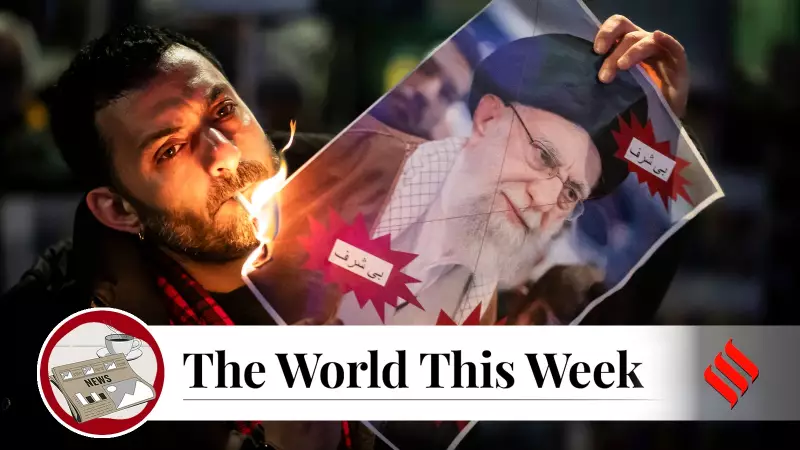
Reza Pahlavi, the 65-year-old exiled son of Iran's last Shah, has become a prominent symbol for protesters. Despite his father being widely unpopular during the 1979 revolution, demonstrators now display Pahlavi's photographs and call for his return.
Living in US exile since 1979, Pahlavi has used social media to galvanize thousands of protesters. He has expressed willingness to return to Iran and lead a transition to secular democracy if the current regime falls.
US Initiates Formal Greenland Acquisition Talks
On January 14, 2026, representatives from the United States, Denmark, and Greenland convened in Washington, DC, for historic formal discussions about acquiring the world's largest island. The US delegation included Vice President J D Vance and Secretary of State Marco Rubio.
Denmark's Foreign Minister Lars Løkke Rasmussen and Greenland's Foreign Minister Vivian Motzfeldt participated in the talks. Both maintained that "Greenland is not for sale" but showed openness to accommodating some US requests. The discussions concluded with "fundamental disagreement" about the island's future.
President Trump reiterated that anything less than US control remains "unacceptable" for national security reasons. He stated the US would acquire Greenland "one way or the other," creating unprecedented tension that threatens NATO cohesion.
European Troops Deploy to Greenland
In response to US threats, European nations have dispatched troops to Greenland as a symbolic show of solidarity with Denmark. The deployments include:
- France: 15 troops
- Germany: 13 troops
- Sweden: 3 troops
- Norway: 2 troops
- Finland: 2 troops
- Netherlands: 1 troop
- United Kingdom: 1 troop
The White House responded that European troop presence will not alter President Trump's objective of acquiring Greenland.
US Completes First Venezuelan Oil Sales
The United States finalized its first sale of Venezuelan crude oil this week, marking a new phase in bilateral relations. The sale to Vitol, the world's largest independent oil trader, represents the first Venezuelan crude cargo sold since President Nicolás Maduro's removal earlier this month.

This transaction forms part of a broader plan to market 30 to 50 million barrels of sanctioned crude, valued at approximately $2 billion to $2.8 billion at current rates. The initial sale totaled around $500 million, with revenue held in a Qatar bank account controlled by the US government.
Following Maduro's capture, Trump announced Washington would control Venezuelan oil sales indefinitely. He has called for US oil companies, including ExxonMobil, Chevron, and ConocoPhillips, to invest at least $100 billion in rebuilding Venezuela's oil infrastructure.
Taliban-Appointed Diplomat Assumes Role in New Delhi
The Taliban achieved a significant diplomatic milestone this week as Mufti Noor Ahmad Noor, appointed by the hardline Islamist group, took charge as Chargé d'Affaires of the Afghan Embassy in New Delhi. Noor previously served as First Political Director in the Taliban's Ministry of Foreign Affairs.
Despite Noor's appointment, the embassy continues to fly the black, red, and green flag of the Islamic Republic of Afghanistan rather than the Taliban's white flag. This development marks a new beginning for India-Afghanistan relations under Taliban governance.
While only Russia formally recognizes the Taliban as Afghanistan's legitimate government, several nations have established diplomatic ties with the group, including India, China, Iran, Pakistan, Qatar, Turkey, Japan, Turkmenistan, and Kyrgyzstan.
In October 2025, Taliban Foreign Minister Amir Khan Muttaqi visited India after receiving a UN Security Council travel waiver. India simultaneously upgraded its diplomatic presence in Kabul from a "technical mission" to a full embassy.
The events of this week demonstrate how rapidly international relations can transform. From protest movements challenging established regimes to diplomatic realignments and resource negotiations, global power dynamics continue evolving in unexpected directions.