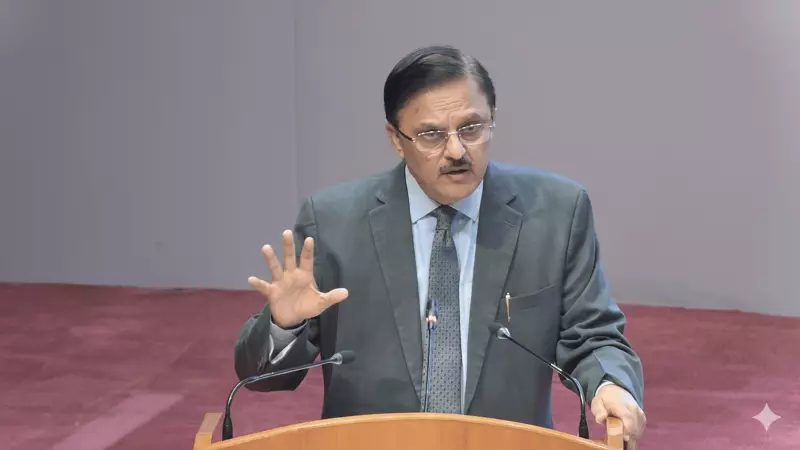
As India commemorates the 76th anniversary of its Constitution adoption, former Supreme Court judge Justice Abhay S Oka delivered a powerful message about the document's enduring significance in safeguarding the nation's democratic foundations.
The Living Document: Constitution as India's Guiding Light
In an exclusive conversation with The Indian Express on National Constitution Day 2025, Justice Oka emphasized that the Indian Constitution remains a vital living guide for the world's largest democracy, especially during periods of rapid transformation. The retired judge, who served on the Supreme Court from August 31, 2021, until his retirement on May 24, 2025, stressed the document's continuing relevance in contemporary governance.
Basic Structure Doctrine: Democracy's Guardian
Justice Oka highlighted the crucial role of the Basic Structure doctrine established in the landmark Kesavananda Bharati case, stating it has been instrumental in protecting democracy in India. "This is one theory that makes democracy in India superior to that of many other democracies worldwide," he asserted during the interview conducted on November 26, 2025.
The former judge explained that this landmark judicial principle creates an obligation for even the legislature to protect the fundamental framework of the Constitution, thereby maintaining the delicate balance of power between Parliament and the judiciary.
Constitutional Education: A National Imperative
Justice Oka expressed deep concern about citizens' limited understanding of constitutional provisions and called for comprehensive educational reforms. "The Constitution must be an independent subject in schools, taught through innovative methods," he insisted, moving beyond the current practice where it occupies only a small portion of civics curriculum.
The retired justice, known for authoring over 370 judgments during his distinguished career spanning the Bombay High Court, Karnataka High Court, and Supreme Court, emphasized that constitutional awareness is fundamental to creating a society that respects and abides by constitutional principles and laws.
Bridging the Implementation Gap
While acknowledging landmark judgments that affirm fundamental rights, Justice Oka pointed to a significant implementation gap at the grassroots level. He noted that police and executive agencies often remain insensitive to constitutional rights due to inadequate training, highlighting the need for better enforcement mechanisms.
Justice Oka proposed a multi-pronged approach to address this challenge, suggesting that courts can influence state agency education through judgments, while institutions like legal services authorities, judicial academies, and police training academies must actively participate in this process. He also highlighted the potential contribution of retired judges in fostering awareness and respect for fundamental rights across government agencies.
Citizen's Role in Upholding Constitutional Values
The former Supreme Court judge outlined three essential responsibilities for citizens in protecting constitutional values:
- Understanding the importance of fundamental rights guaranteed by the Constitution
- Seeking legal remedies when fundamental rights are violated
- Respecting and upholding the fundamental rights of fellow citizens
Justice Oka, renowned for his clarity of thought and judgments that consistently upheld constitutional values during his tenure, stressed that active citizen participation is crucial for the Constitution's ideals of justice, liberty, equality, and fraternity to thrive in everyday life.
As India celebrates this significant constitutional milestone, Justice Oka's insights serve as a timely reminder of the document's living nature and the shared responsibility of all stakeholders—judiciary, executive, legislature, and citizens—in preserving India's democratic character for generations to come.