Former Chief Justice Chandrachud Condemns Extended Detention Without Trial
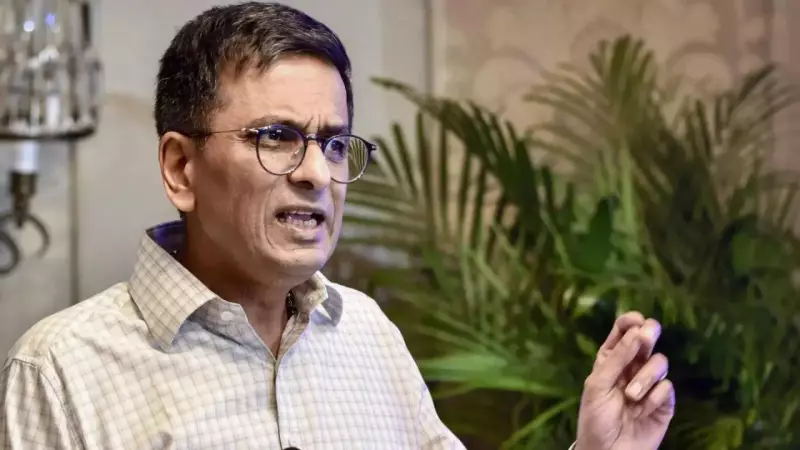
Former Chief Justice of India DY Chandrachud delivered a sharp critique on Sunday. He spoke at the Jaipur Literature Festival. Chandrachud argued that prolonged prison terms without trial damage constitutional justice. He emphasized the urgent need for bail in such cases.
Courts Must Scrutinize National Security Claims
Chandrachud specifically mentioned the case of Umar Khalid. Khalid is a former JNU student leader. He has remained in custody since 2020 under the UAPA. The charges relate to an alleged conspiracy behind the northeast Delhi communal violence. That violence resulted in over 50 deaths. Khalid consistently denies all accusations against him.
"The court is duty bound to carefully scrutinize whether national security is truly involved," Chandrachud stated. He insisted that courts must also assess if the detention is proportional to the alleged threat.
Bail Should Be the Rule, Not the Exception
Justice Chandrachud pointed to a critical failure in the system. Trials often do not begin for years after an arrest. "You must necessarily take into consideration the right to an expeditious trial," he declared. He presented a clear solution. If a speedy trial is impossible under current conditions, then granting bail must become the standard practice.
He explained how stringent laws have warped legal principles. "A lot of our laws... turned the law on its head," he said. They replace the presumption of innocence with an almost automatic presumption of guilt.
A Culture of Fear in Lower Courts
Chandrachud traced the problem's roots to the lower judiciary. These courts are the first point of contact for citizens. He observed that trial judges increasingly hesitate to grant bail. This hesitation does not stem from legal requirements. Instead, it comes from a pervasive sense of fear.
"There is a sense of all-pervading fear — if I grant bail, will my motives be questioned?" he described. This fear creates a gridlock. Lower courts defer decisions to higher courts, causing further delays.
On Corruption and Systemic Reform
The former CJI also addressed judicial corruption. He acknowledged its existence but called the scale exaggerated. "Yes, there is corruption in the judiciary, but that is exaggerated," he noted. He stressed that judges in higher offices face stricter standards. Allegations must be handled firmly within the existing system.
Chandrachud called for thoughtful institutional reform. He described Indian democracy as vibrant yet imperfect. "We live with imperfections and try to improve upon them for the future," he remarked.
Collegium System and Post-Retirement Roles
He defended the collegium system for judicial appointments while admitting its flaws. "As a judge, I was a soldier who implemented the collegium system," he said. As a citizen, however, he sees a clear need for improvement. He warned that the "devil lies in the small print" of any reform.
Finally, he touched on the controversy of post-retirement government roles for judges. The Constitution does not prohibit such appointments. Yet, they often cause public discomfort. Chandrachud explained that civil society frequently questions past judgments if a government post follows soon after retirement. He described these perceptions as largely unfair.