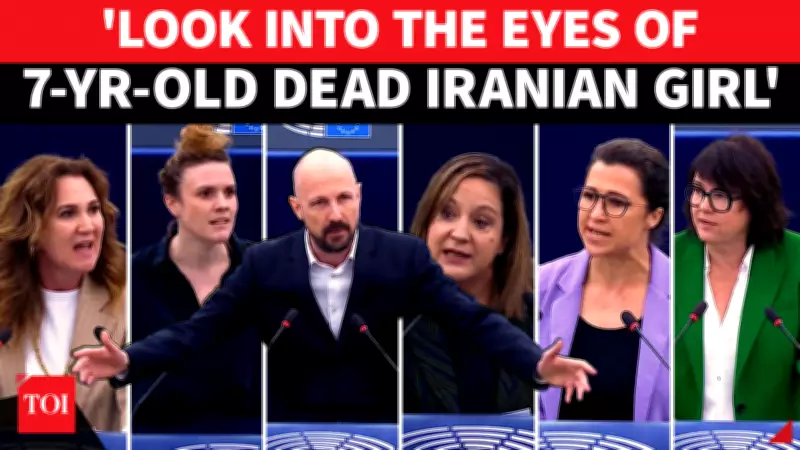
European Parliament Erupts in Heated Debate Over Iran Conflict
A stormy session unfolded in the European Parliament in Strasbourg as lawmakers launched scathing criticism against what they termed the European Union's "hypocritical stance" regarding the ongoing military conflict involving Iran. The debate saw sharp condemnation of Western military actions and direct accusations leveled at EU leadership.
Belgian MEP Delivers Blistering Critique
Belgian Member of the European Parliament Marc Botenga spearheaded the criticism, delivering a pointed rebuke of EU leaders for their position on Iran while allegedly supporting military initiatives by former U.S. President Donald Trump and Israeli Prime Minister Benjamin Netanyahu. "We see the same patterns, the same justifications, the same disastrous outcomes," Botenga declared during the impassioned session.
The Belgian lawmaker drew direct parallels to previous Western military interventions, specifically naming Afghanistan, Libya, and Iraq as examples where promises of democracy instead resulted in "chaos and destruction" for local populations. His remarks highlighted a growing sentiment among some European lawmakers that current approaches to international conflicts repeat historical mistakes.

School Strike Incident Fuels Controversy
Central to the parliamentary debate was reference to reports of a deadly military strike on an Iranian educational facility that allegedly resulted in approximately 170 fatalities, including numerous children. While Iran has officially attributed responsibility for this attack to the United States and Israel, Washington has stated it is investigating the incident while denying any deliberate targeting of civilian structures or populations.
Botenga utilized this incident to bolster his argument that Western military interventions consistently fail to deliver their stated objectives while causing significant humanitarian harm. "When will we learn that bombs don't bring democracy?" he questioned his parliamentary colleagues.
Broader Accusations of EU Leadership Failures
The parliamentary session extended beyond specific incidents to broader criticisms of European Union foreign policy coherence and leadership. Some lawmakers directed their frustration specifically at European Commission President Ursula von der Leyen, characterizing the EU's response as "spineless" and inconsistent with stated European values of human rights and peaceful conflict resolution.
The debate revealed deepening divisions within European institutions regarding appropriate responses to Middle Eastern conflicts, with some parliamentarians advocating for more independent European foreign policies distinct from traditional Western alliances.
Historical Context and Contemporary Parallels
Throughout the session, multiple speakers referenced historical Western military engagements as cautionary tales for current approaches to the Iran conflict. The specific naming of Afghanistan, Libya, and Iraq served to create a narrative continuum suggesting repetitive policy failures in Western interventionist approaches.
This historical framing allowed critics to position current events not as isolated incidents but as part of a concerning pattern with predictable negative outcomes for regional stability and civilian populations.
The Strasbourg debate ultimately highlighted significant tensions within European political circles regarding appropriate international responses to complex geopolitical conflicts, with accusations of hypocrisy and failed leadership dominating the discourse.