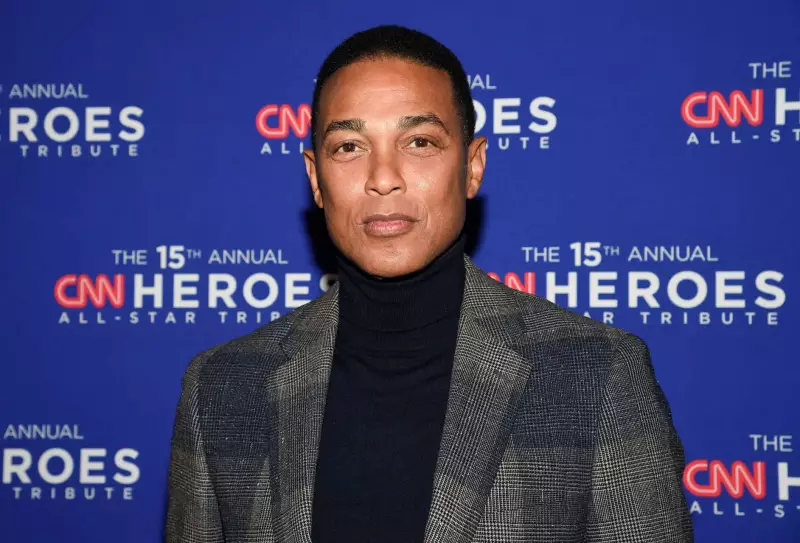
DOJ's Failed Prosecution of Don Lemon Tests Press Freedom Limits Under Trump
When the United States Justice Department briefly attempted to bring criminal charges against journalist Don Lemon for attending and livestreaming an anti-ICE protest in Minnesota, the Trump administration framed it as a straightforward law-and-order issue. However, a federal judge's swift refusal to approve those charges transformed the episode into something far more significant. It became a critical test of how far the administration is willing to stretch federal law in response to protest journalism and how aggressively it is prepared to challenge press freedoms during Donald Trump's second term.
The Standoff and Its National Implications
This standoff has placed Don Lemon, who now works independently after leaving CNN, directly opposite the Justice Department led by Attorney General Pam Bondi. What might otherwise have remained a local protest story has escalated into a national debate over the limits of journalism, the politicization of prosecutions, and the expanding reach of federal authority under a hardline immigration agenda. The case underscores the growing tensions between executive power and constitutional protections for the press.
What Actually Happened in Minnesota
On January 18, Don Lemon traveled to St. Paul, Minnesota, to report on a protest that disrupted a service at Cities Church. The demonstration targeted a local pastor whom protesters alleged was also serving as a senior ICE official. This occurred amid rising anger over aggressive immigration raids and a recent fatal shooting involving ICE agents in the state. Lemon livestreamed the protest from inside the church, describing the scene and speaking to demonstrators. According to his legal team, he did not organize the protest or direct participants, and he was one of several journalists present.

Days later, the Department of Justice prepared criminal charges against Lemon, arguing that his presence and conduct could be interpreted as participation rather than reporting. The proposed charges were submitted to a federal magistrate judge in Minnesota, but the judge declined to sign the complaint, effectively blocking the prosecution before it could formally begin. This refusal stopped the case in its tracks, at least for the time being.
The Broader Context of the Attempted Prosecution
The attempted prosecution did not emerge in isolation. It comes as the Trump administration intensifies its crackdown on immigration enforcement critics and expands the use of federal law to police protests linked to ICE operations. Under Pam Bondi, the Justice Department has adopted an explicitly confrontational posture toward what it describes as disruptions of public order, particularly when protests target law enforcement or federal agencies. The Minnesota church protest was treated not merely as civil disobedience but as a potential civil rights violation involving a place of worship.
By moving against Lemon, the DOJ effectively tested a controversial proposition: that a journalist covering a protest can be criminally liable if prosecutors believe the reporting crosses into facilitation or encouragement. This argument immediately alarmed press freedom advocates, who warned that it blurs the constitutional distinction between observation and participation. The magistrate judge's refusal to approve the charges marked an early judicial check on that approach, but it did not resolve the broader tension between executive power and First Amendment protections.
Reactions and Statements from Key Figures
Don Lemon responded through his attorney, Abbe Lowell, who stated that the DOJ's move amounted to an attempt to punish constitutionally protected newsgathering. Lowell argued that Lemon was doing what he had done for decades: reporting on events of public interest from the ground. In contrast, senior administration figures pushed back. Assistant Attorney General Harmeet Dhillon publicly warned that houses of worship are not public forums for protest and suggested that federal statutes, including the FACE Act and post-Civil War civil rights laws, could be applied to the incident. Lemon was described as being "on notice," language that critics said carried an implicit threat even without formal charges.

Pam Bondi, while not personally filing the complaint, defended the department's broader response to the protest and reiterated that the DOJ would not tolerate disruptions framed as activism against ICE or law enforcement. After the judge's refusal, Lemon noted that it was telling he had been singled out despite other journalists being present, and he pointed to the wave of threats and abuse he received following the administration's statements.
Why This Case Matters for Journalism and Democracy
At its core, this episode raises a fundamental question: where does journalism end and criminal liability begin when reporters cover protests that authorities deem unlawful? If the DOJ's theory had been accepted, it would have created a precedent allowing prosecutors to second-guess journalistic intent and retrospectively redefine reporting as participation. That prospect has significant implications for journalists covering protests, police actions, or politically sensitive events, particularly under an administration that openly views much of the media as adversarial.
The case also highlights how prosecutorial power can be used as a signal rather than a final act. Even without charges, placing a journalist "on notice" sends a message that may deter aggressive reporting, especially by freelancers and independent reporters without institutional backing. This chilling effect could undermine the role of the press in holding power accountable.
Bottom Line and Future Implications
Don Lemon was not charged, and the court's refusal to approve the DOJ's complaint represents a clear legal setback for the Trump administration's approach in this instance. However, the attempted prosecution has already achieved something else. It has clarified how aggressively the Justice Department under Pam Bondi is willing to test the boundaries of protest law and how quickly journalism itself can become entangled in political enforcement battles.
For now, the courts have drawn a line. Whether the administration respects it or tries again with a different case and a different theory is the question that will shape press freedom debates in the months ahead. This incident serves as a stark reminder of the ongoing challenges to media independence and the need for vigilance in protecting constitutional rights in an increasingly polarized political landscape.