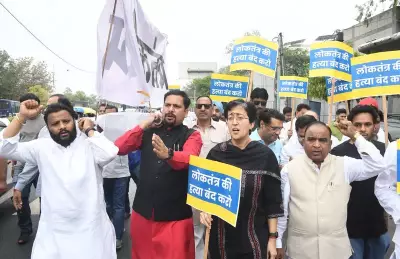
The tragic alleged murder of a young woman in Hubballi, reportedly by her parents for marrying a man from a Dalit community, has ignited a fierce demand for a dedicated law to combat honour killings in Karnataka. The case of Manya Patil has become a rallying point for social activists and organisations fighting caste-based violence, who are now pushing for stringent legislation tentatively named the 'Manya Act'.
Online Campaign Gains Momentum for Separate Law
In response to the incident, campaigners have launched a widespread online drive urging the state's chief minister to enact a specific law that ensures strict punishment for those involved in honour crimes. They argue that the recurring nature of such violence is discouraging intercaste marriages and undermining the constitutional principle of social equality. A key contention is that existing legal frameworks are insufficient to deter these acts, and a dedicated statute is needed to send an uncompromising message against violence committed in the name of caste and honour.
Writer Telex Ravikumar from Shivamogga drafted an open letter to the chief minister and home minister on December 24, appealing to his network to endorse and circulate it. "So far, about 400 of my direct friends and thousands of indirect contacts have shared it on Facebook. We are compiling all the names of those who have supported the cause," Ravikumar stated. He added that they have sought an appointment with the chief minister to submit the letter personally and that several like-minded groups have begun submitting memoranda across districts to raise public awareness.

Legal Experts Stress Need for Education and Implementation
Advocate Akhila Vidyasandra highlighted that while Supreme Court guidelines exist to initiate action against those obstructing intercaste marriages, there is a profound need for societal education to eradicate casteism. She emphasised that any proposed act must incorporate judicial directions laid down in landmark cases like Shakti Vahini and the Vishaka guidelines. Vidyasandra maintained that current laws are inadequate to address deep-rooted casteist attitudes and called for a dedicated act, stressing that its effective implementation after assembly approval is crucial.
Ravikumar observed that while honour killings have faced strong opposition in North India, similar voices are now growing louder in Karnataka. "At present, government departments can hold counselling or conciliation meetings in such cases, but that is not enough. A clear legal warning is the need of the hour," he said. He also noted that the absence of a specific law often limits proactive policing, and a separate act could empower authorities to better monitor and act against those who oppose intercaste unions. According to him, this demand has drawn support from across the ideological spectrum, including both left- and right-leaning groups.
A Statewide Call for Justice and Legal Reform
The campaign surrounding Manya Patil's case represents a significant shift in Karnataka's civil society response to honour-based violence. Activists argue that a specific law would not only provide a stronger deterrent but also formally recognise the unique nature of these crimes, which are driven by regressive social norms. The push for the 'Manya Act' underscores a broader struggle to protect individual choice and dismantle the caste hierarchy that fuels such extreme violence. The outcome of this campaign could set a precedent for legal reform aimed at safeguarding personal liberty and punishing those who seek to violently enforce caste boundaries.