The Delhi Police has made a significant statement before the Supreme Court, characterizing the 2020 Delhi riots as a direct assault on the nation's sovereignty rather than mere protests against the Citizenship Amendment Act.
Legal Submission in Supreme Court
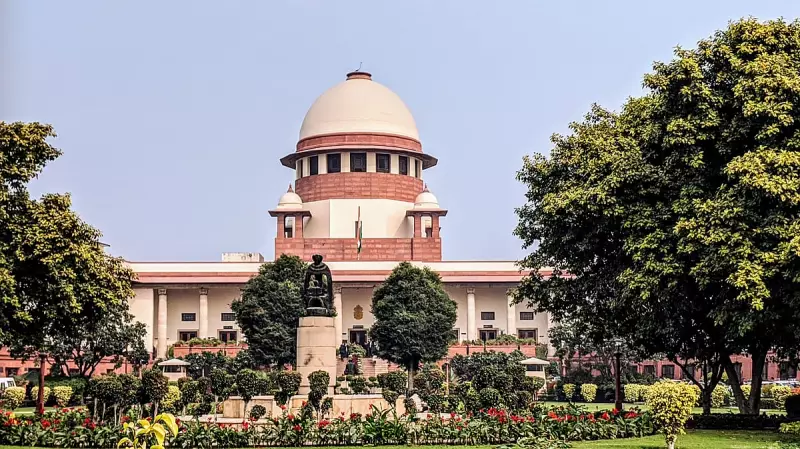
Solicitor General Tushar Mehta, representing the Delhi Police, presented this position before a bench comprising Justices Aravind Kumar and N V Anjaria. The hearing, which took place on November 18, 2025, revealed the government's official stance on the violent events that shook the national capital in February 2020.
Tushar Mehta argued that there was a deliberate attempt to divide Indian society along communal lines during the riots. He emphasized that the violence transcended ordinary political agitation and represented something far more sinister in nature.
Beyond CAA Protests
The Solicitor General's submission made a crucial distinction between legitimate democratic protest and what transpired during the riots. He clarified that the events were not merely an agitation against the Citizenship Amendment Act, but rather represented a coordinated effort to undermine social harmony and national integrity.
This characterization marks a significant escalation in how the authorities view the riots that resulted in numerous casualties and extensive property damage across several areas of Delhi.
National Security Implications
The Delhi Police's position before the apex court underscores the gravity with which law enforcement agencies view the 2020 violence. By framing the riots as an attack on sovereignty, the authorities are highlighting what they perceive as a threat to the fundamental structure of the nation.
The bench hearing the matter will now consider this submission as part of ongoing legal proceedings related to the riots. The court's eventual ruling could have far-reaching implications for how similar situations are handled in the future and how the line between protest and sedition is drawn.
This development comes nearly five years after the actual events, indicating the complex legal and investigative processes involved in addressing such large-scale civil unrest.