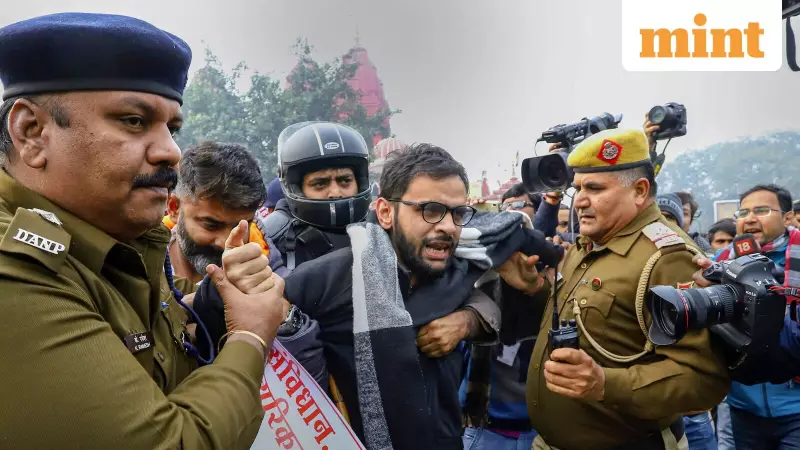
In a significant development at the Supreme Court, the Delhi Police has strongly argued against granting bail to activists Umar Khalid, Sharjeel Imam, and others accused in the February 2020 Delhi riots case, stating that intellectuals who turn terrorists become more dangerous than those operating on the ground.
Police's Strong Opposition to Bail Pleas
The Delhi police presented their arguments before a bench of Justices Aravind Kumar and N V Anjaria on Thursday, vehemently opposing the bail applications of the accused activists. Additional Solicitor General SV Raju, representing the Delhi Police, made a compelling case against releasing the defendants.
According to the police submission, when intellectuals guide and become terrorists, they pose a greater threat than those working at the ground level. The prosecution emphasized that these individuals represent the real prey in terrorist networks and become particularly dangerous due to state support, funding, and subsidies that enable them to become doctors and activists.
The Alleged Masterminds and Charges
The accused in this high-profile case include Umar Khalid, Sharjeel Imam, Gulfisha Fatima, Meeran Haider, and Rehman. They have been booked under the stringent Unlawful Activities (Prevention) Act (UAPA) and provisions of the erstwhile Indian Penal Code for allegedly being the masterminds behind the 2020 riots.
The February 2020 riots in Delhi resulted in 53 fatalities and left over 700 people injured, marking one of the worst communal violence incidents in the capital in recent years. The police claim that the accused played a central role in orchestrating the violence.
Police's Narrative on CAA Protests
In their submission to the Supreme Court, the Delhi Police presented a detailed argument about the nature of the protests and the alleged hidden agenda behind them. According to the police, the Citizenship Amendment Act (CAA) protests served as a red herring, while the real purpose was much more sinister.
The police contended that behind the facade of protesting the CAA, the actual objectives included regime change and economic strangulation of the country. They criticized what they described as a narrative being created that portrays the accused as intellectuals whenever bail applications are filed.
Furthermore, the police expressed concern about what they see as a disturbing trend of professionals, including doctors and engineers, engaging in anti-national activities. This observation highlights the prosecution's view that educated individuals participating in unlawful activities represent a particularly dangerous development.
Regarding the delay in trial proceedings, Additional Solicitor General SV Raju informed the court that the accused themselves are responsible for the delays and therefore cannot benefit from this situation. The prosecution maintains that the defendants have used legal procedures to prolong the trial process.
The case continues to develop as the Supreme Court considers the arguments from both sides. The outcome of these bail pleas could have significant implications for the larger trial and for how the justice system handles cases involving educated professionals accused of serious crimes under anti-terror laws.