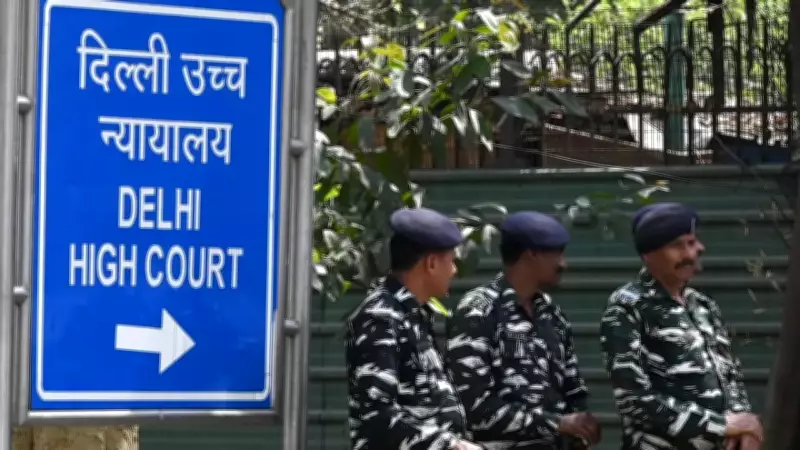
Delhi High Court Grants Regular Bail in Suicide Abetment Case, Clarifies Legal Threshold
The Delhi High Court has granted regular bail to a man accused of abetment of suicide, delivering a significant ruling that the breakdown of a romantic relationship, by itself, does not amount to instigation under criminal law. Justice Manoj Jain passed the order, noting that the prosecution material failed to conclusively establish the essential ingredients required to invoke the offence of abetment.
Case Background and Allegations
The case originated from an FIR registered at the Delhi Police’s Swarup Nagar police station after a 27-year-old woman, a school teacher, died by suicide in October 2025. In the complaint, her father alleged that the applicant, a university professor whom she met during her academic pursuits, had pressured her to convert her religion and marry him. This alleged pressure was claimed to have caused severe mental distress, ultimately leading to her tragic death.
According to the father, the applicant developed a relationship with the deceased and later insisted on religious conversion as a precondition for marriage, which purportedly contributed to her emotional turmoil.
Defence Arguments and Court Observations
The defence presented a contrasting narrative, arguing that the two individuals had been in a consensual relationship for nearly eight years. They separated in February 2025 due to parental opposition, and the applicant subsequently married another woman on October 19, 2025. The suicide occurred five days later, on October 24, 2025.
The defence contended that the deceased may have been under emotional strain due to family pressures and the breakup, rather than any direct instigation by the applicant. The Court supported this view by highlighting the absence of a suicide note or dying declaration indicating provocation or instigation. Furthermore, during the eight-year relationship, no complaint alleging coercion or harassment had been filed, suggesting a lack of prior issues.
Legal Analysis and Threshold for Abetment
In explaining the legal threshold for abetment, the Court emphasized that instigation requires a clear intention and conduct that leaves the victim with no option but to commit suicide. Justice Jain observed that heartbreak and failed relationships are common human experiences, and the mere end of a relationship does not automatically constitute abetment under Section 108 of the Bharatiya Nyaya Sanhita, which corresponds to Section 306 of the Indian Penal Code.
The Court noted that statements from the deceased’s friends indicated she was distressed after the breakup and upon seeing the applicant with another woman. However, none of these statements referred to pressure for religious conversion, undermining the prosecution’s key allegation. Additionally, the Court pointed to a significant time gap between the end of contact and the suicide, further weakening the case for abetment.
Bail Conditions and Final Ruling
Considering that the investigation was complete, the charge sheet had been filed, and the applicant had no criminal antecedents, the Court held that continued custody was unwarranted. Bail was granted on furnishing a personal bond of Rs 25,000 with surety, subject to strict conditions. The applicant must not contact or influence witnesses or the deceased’s family, ensuring the integrity of the ongoing legal process.
The Court clarified that its observations were prima facie and that the trial court would ultimately determine whether the suicide resulted from provocation, emotional distress, or other factors. This ruling underscores the judiciary’s careful balance between addressing serious allegations and upholding legal principles in sensitive cases involving personal relationships and mental health.