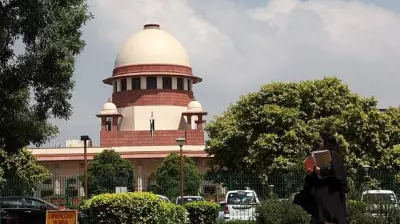
Delhi Court Discharges Gangster Lawrence Bishnoi in Alleged Rs 1 Crore Extortion Case
A Delhi court has discharged notorious gangster Lawrence Bishnoi and two other individuals in a high-profile case involving an alleged extortion attempt of Rs 1 crore. The court ruled that the prosecution failed to establish the fundamental components required to prove the offence of extortion under Indian law.
Court's Detailed Observations on Legal Requirements
Chief Judicial Magistrate Nupur Gupta, in a comprehensive order dated February 20, emphasized that the allegations presented did not demonstrate any actual delivery of property, which is a critical prerequisite for establishing extortion. The court explicitly stated, "To constitute an offence of extortion, there must be actual delivery of property, money, or valuable security induced by fear. Mere demands or threats do not suffice."
The magistrate further elaborated that the provision under Section 386 of the Indian Penal Code requires a "visible overt act" showing that the accused put a person in fear of death or grievous hurt. The court observed, "In the absence of any apparent overt act leading towards the act of extortion, it cannot be said that an offence committed was extortion by threat."
Background and Details of the Case
The case originated from an FIR registered at Sunlight Colony Police Station based on a complaint filed by Raman Deep Singh. The complainant alleged receiving threatening calls from an unknown number during the night of April 23–24, 2023, demanding Rs 1 crore and threatening his life. Following this complaint, an official investigation was initiated.
The Delhi Police Crime Branch subsequently filed a chargesheet against four accused individuals: Lawrence Bishnoi, Sampat Nehra, Ashish Sharma, and Haren Sarapdadiya. The charges were framed under Sections 386 and 387 of the Indian Penal Code, read with Section 120B, which pertains to criminal conspiracy.
Prosecution and Defense Arguments
The prosecution argued that sufficient material had been placed on record to "prima facie" establish the involvement of the accused in the alleged extortion scheme. They presented evidence and statements to support their case.
However, the defense team strongly contested these claims, highlighting several critical deficiencies in the prosecution's case. They pointed out that none of the accused were named in the original FIR, and no recovery of property or money was made from their possession. The defense further argued that the arrests were based solely on disclosure statements of co-accused, which they claimed was insufficient for conviction.
Court's Final Ruling and Legal Analysis
Magistrate Gupta meticulously analyzed the evidence and legal provisions, noting that Section 386 IPC specifically requires proof that property was delivered under fear. The court observed that neither the complainant alleged any delivery of property nor did the chargesheet indicate that any money or valuable security was handed over to the accused.
In its concluding remarks, the court held that in the absence of such crucial evidence, the offence of extortion could not be substantiated. Consequently, all the accused were discharged from the case, marking a significant legal development in this high-profile matter.
This ruling underscores the stringent legal standards required to prove extortion under Indian law, particularly the necessity of demonstrating actual delivery of property induced by fear, beyond mere threats or demands.